Cutting Tape
Splicing tape with a razor felt like a magic trick. It was meticulous – a punisher of the inaccurate – and if you botched counting the clicks that signaled a waveform cycle or rolled the wrong inch of tape you might completely ruin a good take. It was essential to being a good recording engineer when tape reigned.
Choosing Between Tape and Print
When I was 18 and coming home from my first summer in college, I had two options for work. I had written a flattering, clumsy email to Mitch Easter, famed producer of R.E.M., Pavement, Wilco, and countless others to ask if he would be willing to take me on as an intern at his hallowed Fidelitorium in Kernersville, NC, and he had said yes. The catch was I had to make the round trip there and back to Martinsville five days out of the week and that I would not be paid. The Fidelitorium was home to some beautiful Otari and Studer tape machines. Arcane to outsiders but revered by the folks who relied on them for their bread and butter. There was already plenty of rumbling and disruption around the rise of Avid’s Pro Tools and relatively affordable digital setups, which many studios were reluctantly integrating in parallel to their existing infrastructure. You didn’t have to squint to see the fallout from Napster and the collapse of the 90’s physical media boom, despite early 00’s artists like Eminem, Britney Spears, and N’Sync doing record numbers on release weeks. I had already made the jump from a 48kbps home internet setup to the wonders of broadband in my freshman dorm.
At the same time, I was offered a position as a paid (crucial at the time) intern at my hometown paper, The Martinsville Bulletin. Ginny Wray, the Editor in Chief at the time, was incredibly bright, notoriously unforgiving, and trying to manage another industry in flux. The Bulletin offices were attached to a giant (to me) printing facility that housed large offset printing presses that gestured towards the expensive, messy gears of distribution that tech promised to optimize. Meanwhile I was familiarizing myself with Quark, the industry standard layout tool for papers at the time, wrestling with archaic layout formats and hoping to not get my knuckles rapped in the edit room. We had one opinion writer at the paper who fully refused to engage with it and insisted on pasting up the layouts for his columns until his retirement. In my later college years I would often see him drinking alone at the end of the bar at the Village Cafe with a small notebook in front of him.
Promises and Trades in Every Industry
Promises and trades were made in each of these industries. The cumbersome tools of the past were giving way to ones that would allegedly improve everyone’s day-to-day work, give more people access to the end product, and create an environment where, presumably, everyone could flourish under the free-flowing wellspring of art and information.
Clippy Crosses the Rubicon
I think about this a lot when I open nearly any tab in my workspace or on my home computer and have a friendly descendent of Clippy tell me that it’s here to help make my day easier. A digital assistant crossing the Rubicon to become adware. Increased shareholder value lapping at the tips of my fingers like a high tide.
When Optimization Collapses
As we now know, the promise of optimization and unlimited free time in both of those industries collapsed into a level of disruption that nearly destroyed them both. As investors and venture capitalists invaded both industries and rolled out the concept of content – the undefinable catch-all for the labor (either paid or unpaid) that we are all now expected to either create or consume.
That’s not to say that both of these places don’t still exist. After a period of digital frenzy, many studios, including The Fidelitorium, survived as lush hybrids of both worlds. Home recording was great, but with record sales wiped out by the tide of streaming, there was a level of quality control that required expertise, communication, and skill. The tricks of early DSP and cheap plugins became easily scannable by the general public, and there was a need for a distinctive investment.
Fetishizing the Wreckage
The wreckage also becomes fetishized. Plugins and pedals are built to emulate the flaws of dead formats. Early algorithmic attempts at synthesizer and effects emulation are celebrated for their vibe. Smaller publications are even pushing paper once again, albeit in reduced numbers and utilizing a small army of freelancers. Their circulation is smaller, but they’ve become cherished objects to many.
Certainly part of this is due to nostalgia, but it also seems to be the byproduct of having to deal with Silicon Valley’s detritus and tethering us to a vision of the future that is often shared more by those who finance it than those who have to make ends meet.
The Echoes of Media Consolidation
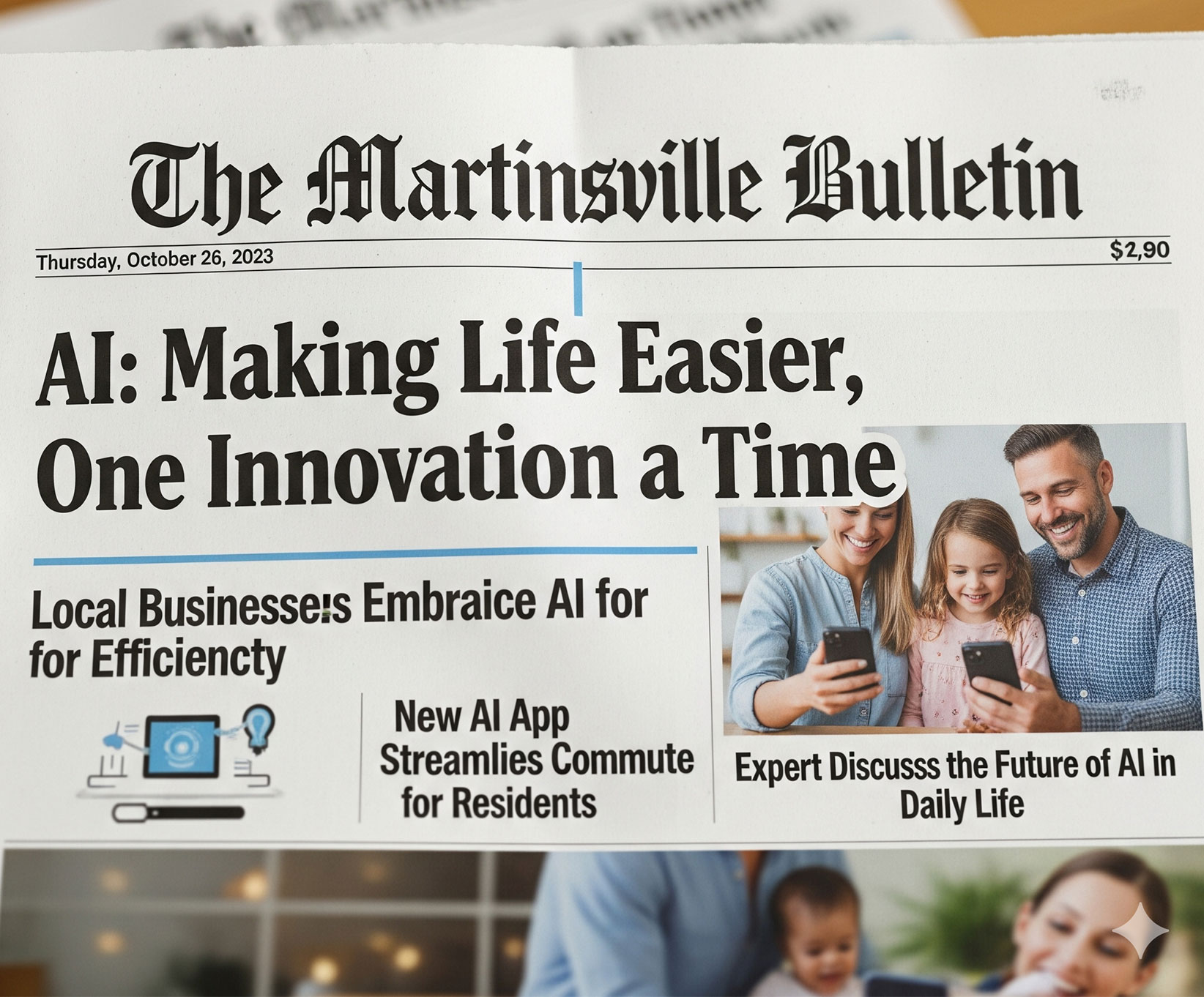
When I see handwringing and doomerism about AI coming from inside the house with tech CEOs and investors, I don’t have to squint to see the vision-deficient shellshock that lays in their wake. I recall reading about how The Martinsville Bulletin, the oldest continuously run business in Martinsville, dating back to 1889, was sold and splintered by large media conglomerates padding their portfolios. I remember hearing when they went to three days a week, and finally when they ceased regular delivery altogether. Now, like many small regional papers, it exists as a figment of its former self.
Perhaps this is why the endless AI features we now encounter on a daily basis feel desperate. “Please trust us this time! We promise we’ll make your life easier!” they bleat, while simultaneously releasing doomsayer lists of jobs that will be eradicated by programs that forget what day of the week it is, hallucinate facts almost constantly, and can “replace interns.”
The Work You Can’t Replace
What would’ve happened if I had been replaced by AI at any of my internships? Most of my time at the Martinsville Bulletin consisted of field work, either at public pools, doing man-on-the-street questions with random folks at the mall, and trying to tease out printable quotes from reluctant passers-by at city events. Showing up and dealing with people who were either forthcoming, difficult, bloviating, or some fun and unexpected combination thereof. This formed the crucible of the skills I use today in Delivery Management. Had those interactions been completely mediated by software, I don’t know how I would’ve learned to operate under pressure.
Lessons in Struggle and Context
I don’t have any particularly optimistic button to wrap this up, but I do want to emphasize that so much of what I use today in work and in life was formed by tasks and interactions we were supposed to be glad to rid ourselves of. The struggle to parse context in real time with strangers and colleagues, the nuance of communication, strategy through collaboration that isn’t reliant on products masquerading as process, and the pressure of a room full of people staring you down while you take a razorblade to their art.
Loved the article? Hated it? Didn’t even read it?
We’d love to hear from you.