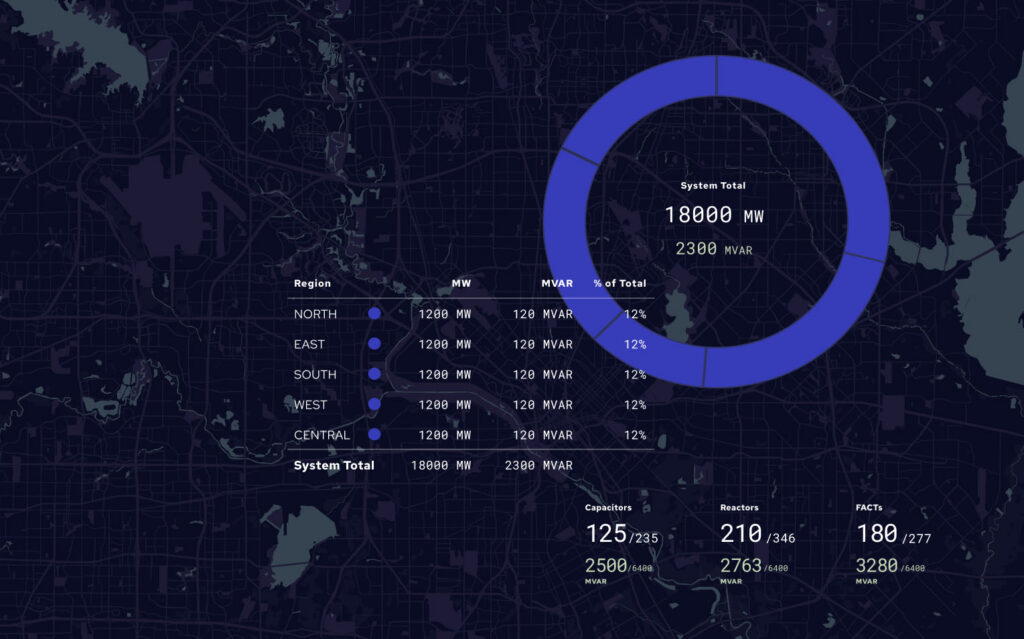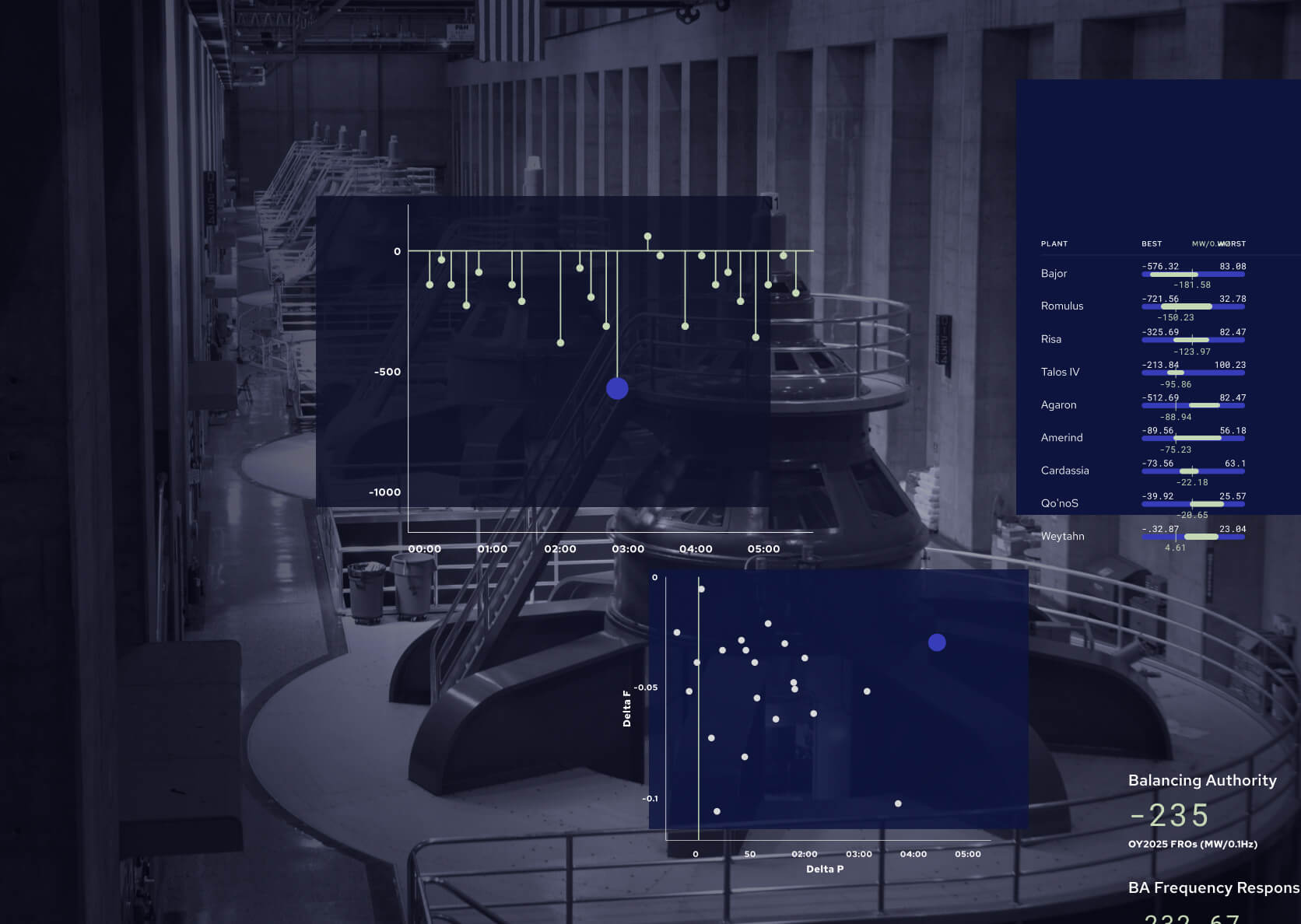

See How Your Power Plants Really Respond
Aion Pulse helps Balancing Authorities automatically evaluate generator performance after grid disturbances—so engineers can spot problems early, focus their time where it matters, and protect reliability before compliance or operational risks emerge.
Grid Reliability Depends on Response You Can Trust.
Aion Pulse provides an automated, fleet-wide view of generator performance using PMU and SCADA data. It measures frequency and voltage response during real grid events and converts complex measurements into clear performance metrics.
By identifying underperforming assets, validating control behavior, and supporting NERC and FERC requirements, Aion Pulse replaces reactive studies with continuous assurance by delivering faster insight, less engineering effort, and greater confidence in reliability.

Aion Pulse in the News
New Grid-Monitoring Technology Moves to Market
A grid-monitoring tool originally developed at Pacific Northwest National Laboratory (PNNL) has moved from research prototype to commercially supported software as Aion Pulse.
Using PMU and SCADA data, Aion Pulse helps utilities and Balancing Authorities automatically evaluate how large generators respond to grid disturbances. The platform replaces manual event hunting with repeatable, fleet-wide insights that can strengthen grid reliability and support NERC compliance.

If Nothing Changes, Balancing Authorities Risk:
Missing under-performing generators until after event
Slower, more reactive responses to NERC BAL-003-2 concerns
Overloaded engineering teams struggling to keep up
Model validation efforts spread too thin or in the wrong places
Increased reliability risk due to generation performance deviations
Balancing Authority compliance can’t rely on manual workflows.
What Aion Pulse Does
Automated Event Detection
Identify frequency and voltage disturbances automatically, without manual log hunting or tuning fatigue.
Frequency Response & Droop
Quantify MW response, verify droop behavior, and confirm primary frequency response meets NERC guidelines.
Compliance-Ready Insights
Support BAL-003-2, FERC 842, and emerging IBR standards with objective, measurement- based evidence.
Voltage Response Intelligence
Measure reactive power support during voltage events and track adherence to voltage schedules across time and load conditions.
Fleet-Wide Visibility
Rank plants and separate constrained assets from true control issues, all in a single, intuitive interface.
Move from Reactive Analysis to Continuous Assurance.
Designed for Balancing Authority Engineers
Aion Pulse is built for planning engineers and analysts at Balancing Authorities responsible for understanding generator behavior and protecting system reliability.
By automatically identifying under-performing generators, Aion Pulse ensures that validation efforts are targeted, timely, and impactful.
Engineers manually identify events, run one-off analyses, and review plots generator by generator—often after issues have already escalated.
Aion Pulse automatically handles the upfront analysis, screening generator behavior so engineers can zero in on true performance problems early.
Why Aion Pulse Is Different
This is generator performance evaluation built for today’s grid—not yesterday’s workflows.
- Automatically detects events, eliminating manual event selection.
- Continuously analyzes generator performance across events instead of relying on one-off studies.
- Evaluates overall BA performance to determine whether defined obligations were met.
- Compares expected and measured response to verify whether generators are responding correctly.
- Exports event data to support model validation and compliance reporting.
Confidence Without the Guesswork
While BAL-003-2 applies at the BA level, compliance depends on how individual generators respond during real disturbances.
Aion Pulse gives engineers the confidence that:
- Generator behavior is being monitored consistently
- Performance issues are identified early
- Model validation is focused where it’s most needed
- Reliability risks are addressed before they escalate
The grid is evolving quickly. Your hosting capacity workflows should too.