
Made for Teams Solving Interconnection at Scale
From a single injection study to a full cluster cost allocation: built, run, and defended in one transparent platform. No coding. No from-scratch modeling. No black boxes.
Minerva Interconnect™ is a cloud-based platform built for the cluster-study era of interconnection. Its Model On Demand (MOD) engine builds study-ready power flow models in real time from the latest queue and transmission data, so every hosting capacity screen, point study, and full FERC Order 2023 cluster study runs on a current model, never a stale snapshot.
In-Queue Analysis, Built for FERC Order 2023
The queue is no longer a line. It’s a cohort. Order 2023 replaced first-come, first-served serial studies with cluster studies that evaluate every request in a window together, share the constraints they jointly cause, and allocate upgrade costs across the group. That math breaks spreadsheets.
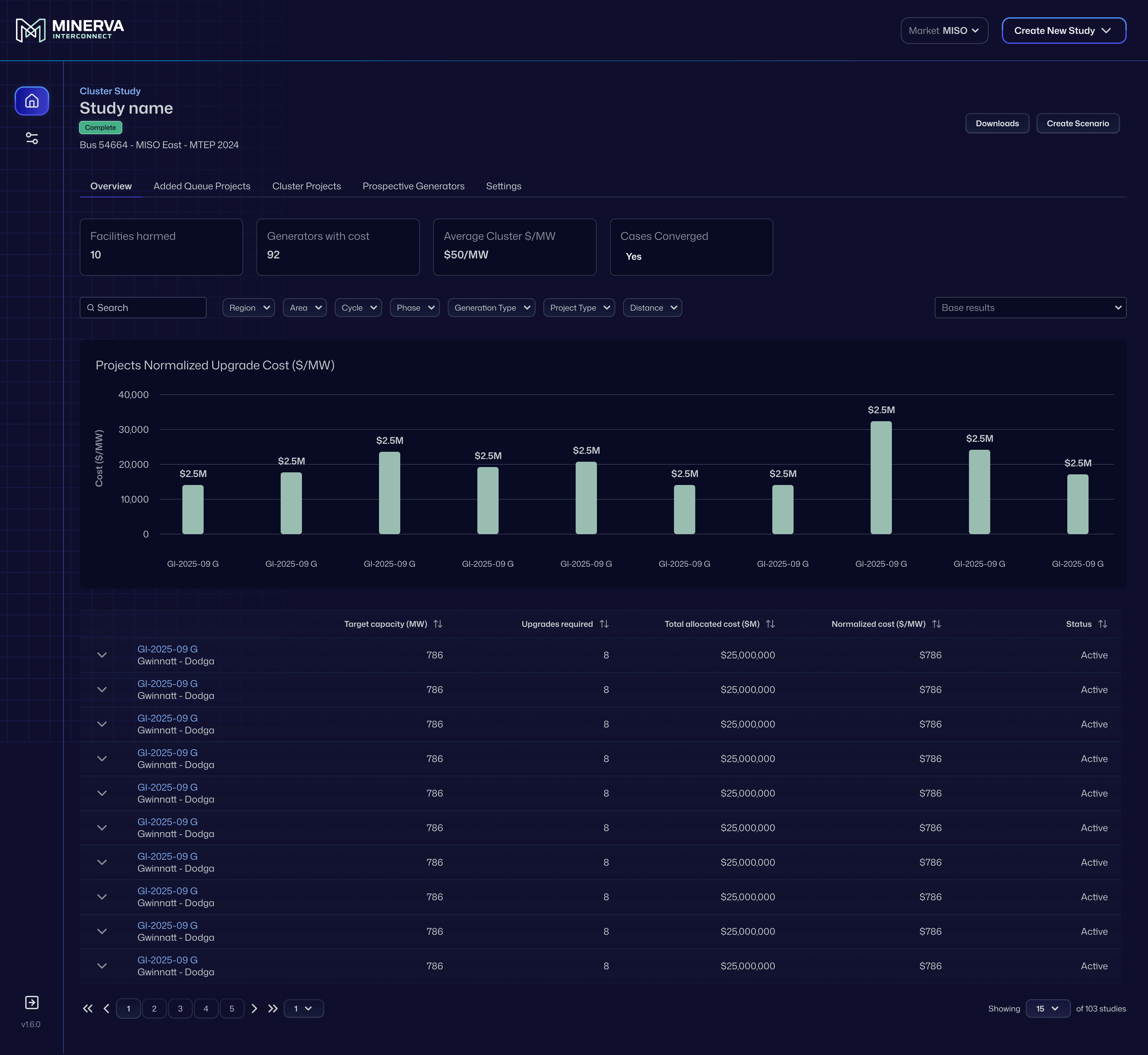
Minerva runs the whole cluster workflow in one place. Group any set of queued or prospective projects into a cohort. Compare a baseline case against the combined-cluster case under N-1 contingencies. Pinpoint the exact facilities the cluster newly overloads. Then allocate each upgrade’s cost across the cohort using transparent, DFAX-weighted methodology, down to the dollar, per project, per flowgate.
Every number traces back to a model, an assumption, and a contingency you can show a regulator.
- Cohort modeling. Combine queued and prospective projects into a named cluster and study their joint system impact.
- Bench-vs-cluster comparison. See exactly which constraints the cluster causes that prior-queue conditions did not.
- Cost allocation that matches your methodology. Minerva mirrors your utility or ISO/RTO’s own approach, with DFAX-weighted per-project shares and per-flowgate breakdowns your stakeholders can trust.
- Drop-out scenarios. Withdraw any subset of cluster members and watch every remaining project’s allocated cost update in minutes.
Cluster cost allocation and queue-position risk, answered before you sign an interconnection agreement.

Basic Hosting Capacity Maps Aren’t Enough Anymore
The Grid Needs
Creative Engineering.
The world of interconnection is evolving fast. Energy demand is skyrocketing. Queues are backed up. Utilities are shifting from serial studies to cluster-based interconnection processes. At the same time, regulatory complexity continues to grow.
A map color-coded with one-time injection checks can’t price a cluster, model a withdrawal, or defend a cost allocation. Today’s interconnection environment demands more.
To connect today and tomorrow, we need better approaches. Ones driven by engineers bold enough to think differently. That’s where Minerva Interconnect™ comes in.
We built Minerva not to sideline engineers, but to amplify them.
Minerva helps teams scale analysis, cost allocation, and queue management workflows with greater speed, transparency, and confidence.
As utilities and developers move to cluster-based studies, the work multiplies: more projects per study, more scenarios per project, more cost allocations to defend, all on assumptions that change weekly. Teams need workflows that evaluate large portfolios and shifting conditions without rebuilding a single model from scratch.
Cut wasted effort, speed interconnection studies, and deliver transparent results—powered by Minerva.
Minerva Interconnect is designed to help utilities and developers accelerate interconnection studies, streamline planning, and deliver transparent, data-backed decisions. Built on a structured Project Data Module foundation, Minerva ensures every study is flexible, traceable, and defensible from the ground up.
Cluster Studies & In-Queue Cost Allocation
Evaluate an entire cluster of interconnection requests together, in line with FERC Order 2023. Identify the constraints the cohort jointly causes, allocate upgrade costs across projects with DFAX-weighted methodology, and stress-test the outcome with drop-out scenarios when neighbors withdraw, all with full, regulator-ready transparency.
Large-Area Hosting Capacity & Injection Analysis
Run wide-area screenings and precise single-POI injection studies to find clean-injection zones earlier, understand upgrade sensitivities, and focus engineering effort where capacity actually exists, across hundreds of points of interconnection in a single run.
Contingency and Resilience Planning
Simulate “what-if” scenarios—such as withdrawal of prior queued project—and see how capacity shifts. Plan your projects with clear, actionable data.
Fast Pre-Screening for Interconnection Requests
Quickly check incoming proposals against available capacity before assigning them to full studies. Eliminate wasted effort on non-viable projects and respond to developers faster.
Transparent Stakeholder Communication
Show regulators, developers, and communities exactly how your conclusions were reached. Minerva’s clear visualizations and surfaced assumptions help build trust and speed approvals.
Structured Project Data & Model Integrity
Define, refine, and manage project modeling details in one unified environment. Minerva’s Project Data Module (PDM) keeps assumptions, injection parameters, topology changes, and study inputs organized, traceable, and quality-controlled so engineers gain flexibility without compromising data integrity.
Model On Demand (MOD)
Generate current, study-ready power flow models on demand, with the latest queue data, transmission upgrades, project withdrawals, and topology assumptions already baked in. Every study starts from a live model, never a stale snapshot.
Cost Visibility & Upgrade Sensitivity
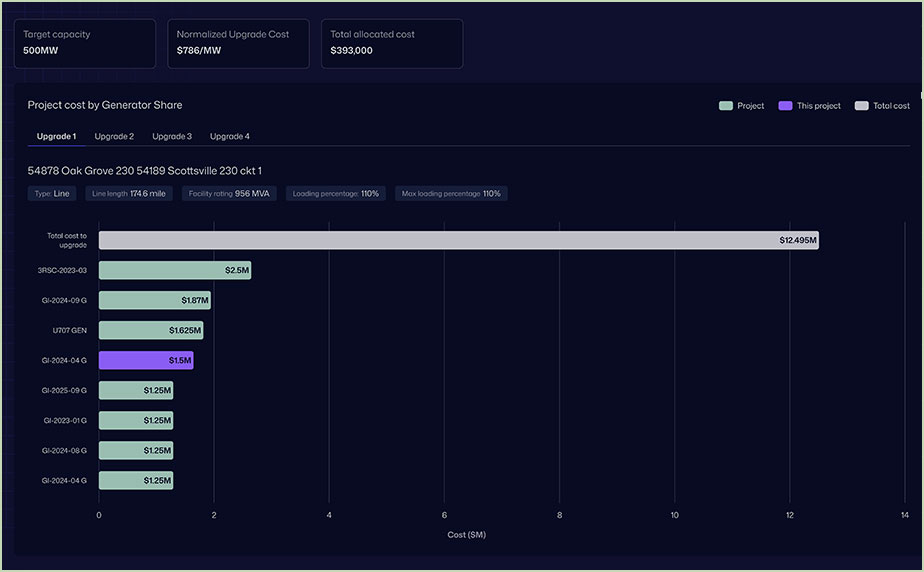
Visualize upgrade costs with clear cost curves and scenario comparisons, so teams see exactly how interconnection cost shifts with project size, location, and queue conditions, and can show a regulator how every figure was reached.
What Makes Minerva Different

Unlimited Projects and Studies.
Rapid Insight.

Built for How Interconnection Actually Works.

Transparent by Design.
Flying Blind: How Old Assumptions and Canned Answers Are Killing Interconnection Projects
Discover why access to data is no longer enough, and how developers are gaining an edge through visibility, scenario modeling, and transmission planning expertise.
Minerva Features
From Market-Wide Views to Precise Injection Modeling
Run In-Queue Analysis Seamlessly
Turn a list of queued projects into a finished cluster study without leaving the platform. Group the cohort, compare baseline against the combined-cluster case under contingency, and produce per-project, DFAX-weighted cost allocations. Re-run instantly as projects enter, scale, or withdraw. The serial-to-cluster transition FERC Order 2023 demands, handled in one workflow.
Build Models Your Way
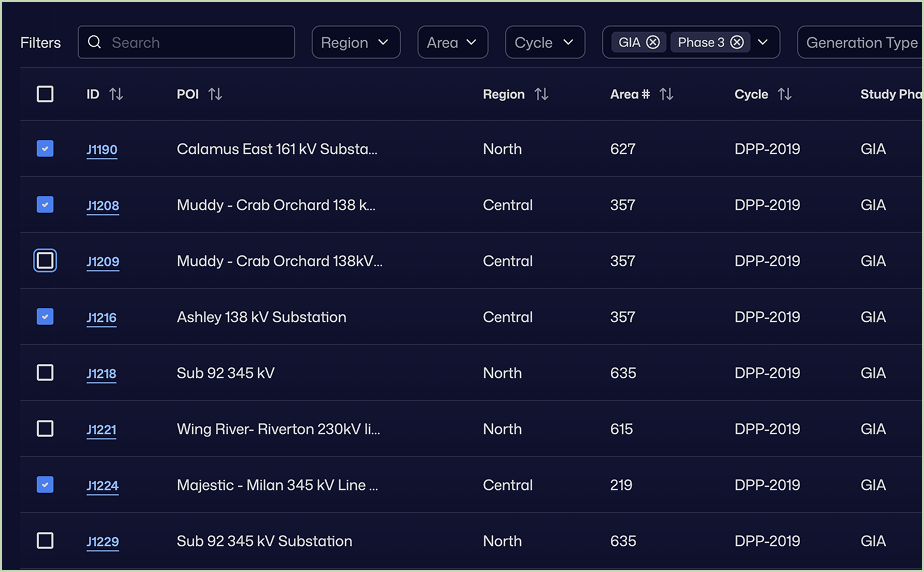
Quickly include or exclude projects with simple table toggles, filters, and dropdowns—no need to rebuild your model from scratch.
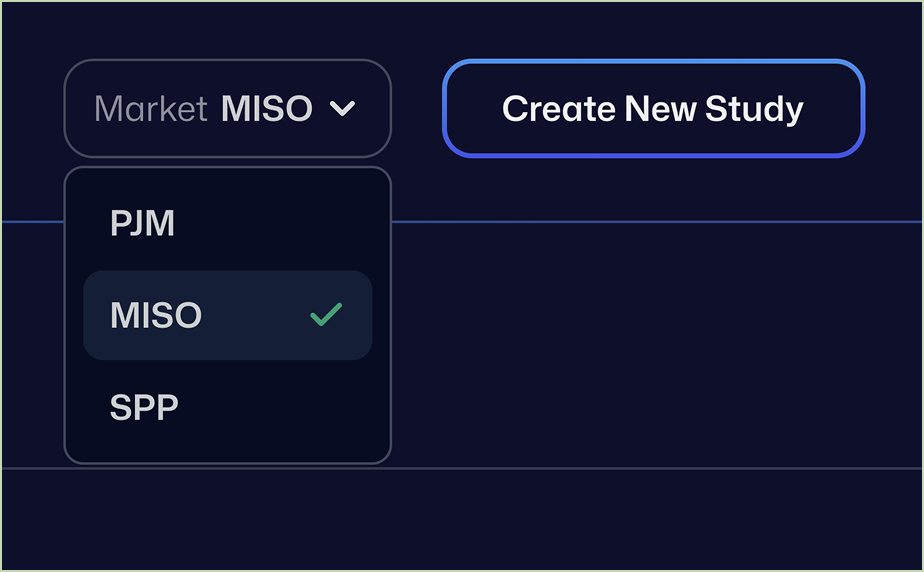
Switch Markets in Seconds
Move seamlessly between markets like MISO and SPP, with instant updates to results and study data.
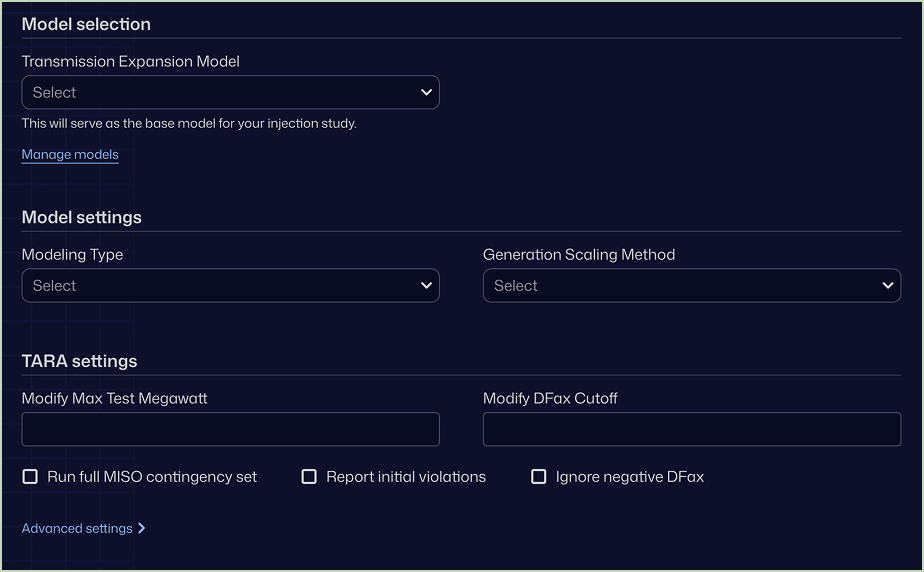
Full Control, Full Transparency
Fine-tune every aspect of your study—base model, modeling type, and TARA settings—with complete visibility into how results are generated.
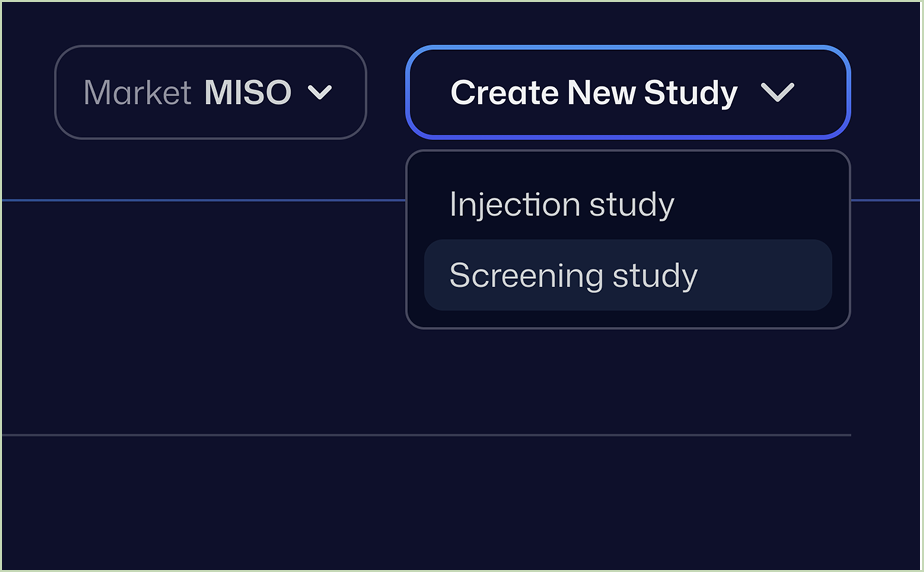
Choose the Right Study
Run both Injection and Screening studies in a single platform, so you always have the right analysis for the job.
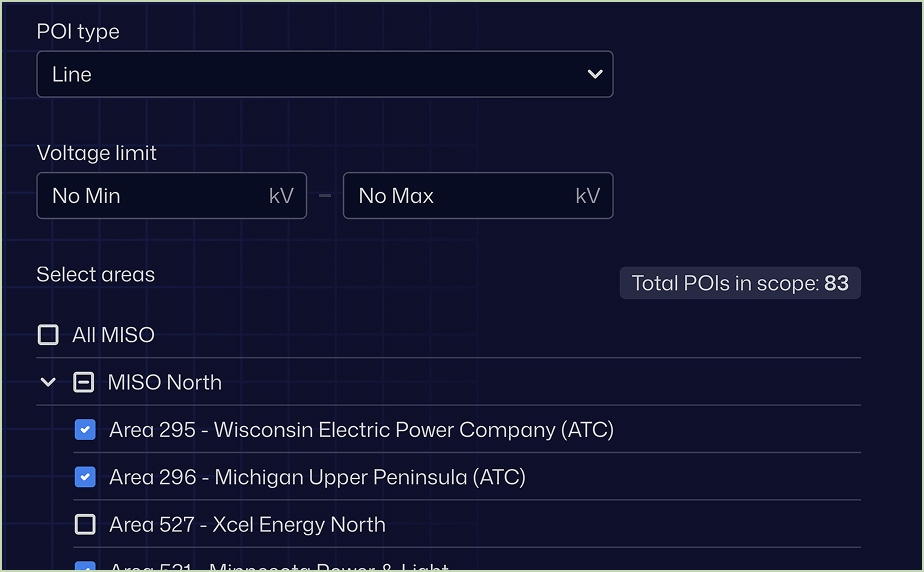
Screen the Entire Network for Capacities
Define your scope in minutes and launch screening studies with a clear, guided workflow that covers the full network.
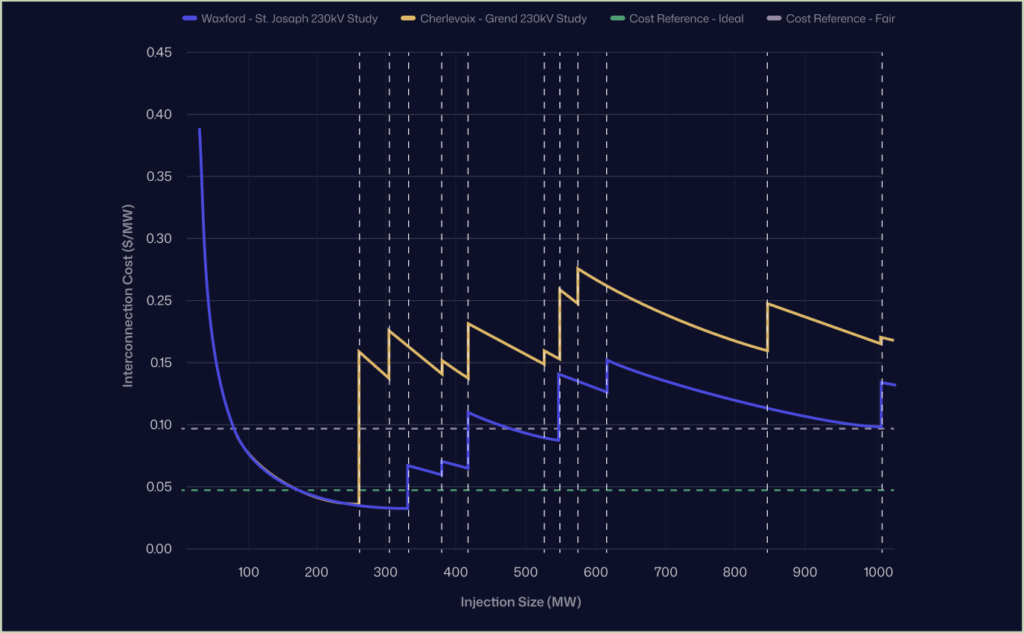
See Costs at a Glance
Visualize upgrade costs with clear cost curves, so you can spot thresholds and tradeoffs at a glance.
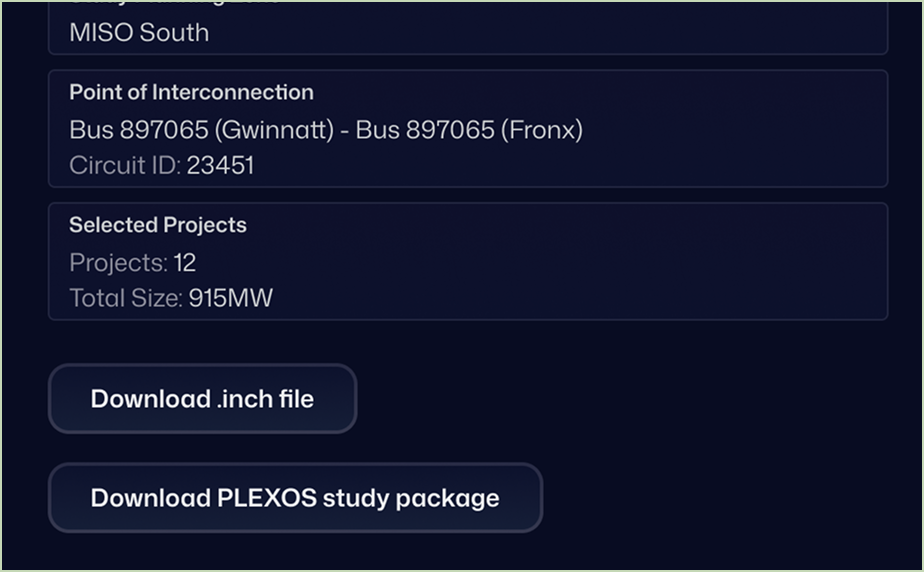
Seamlessly Connect to Plexos
Export your study models directly into Plexos with one click, making it easy to integrate studies into broader planning workflows.
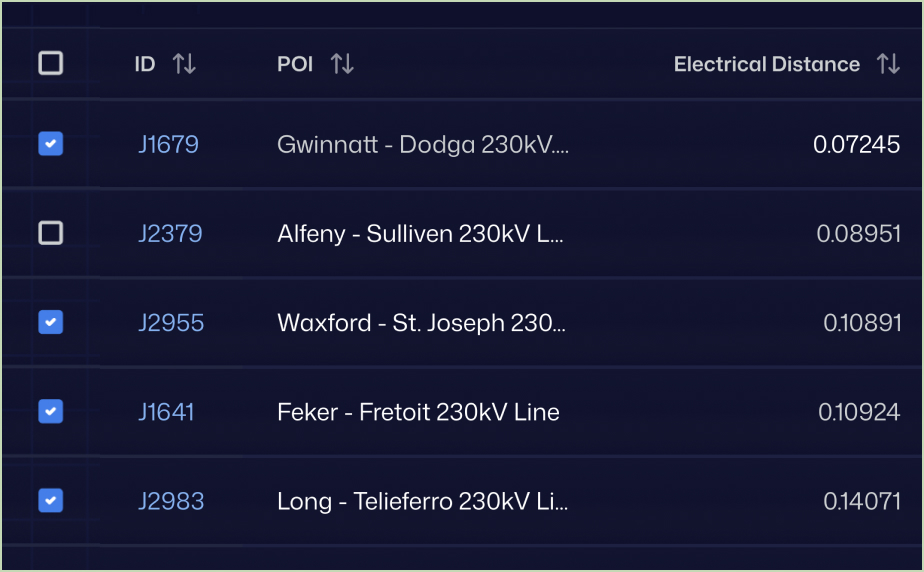
Prioritize by Impact
Minerva ranks projects by electrical distance, putting the most impactful ones at the top. Easily identify which prior-queue projects matter most for your study results.
Minerva is for Interconnection Engineers Who…
- Need to keep pace with evolving grid and regulatory demands
- Want to reduce wasted effort on unviable projects
- Care about modeling accuracy and transparency
- Thrive when they can think creatively and plan boldly
See how Minerva Interconnect helps your team move faster, think deeper, and plan smarter.