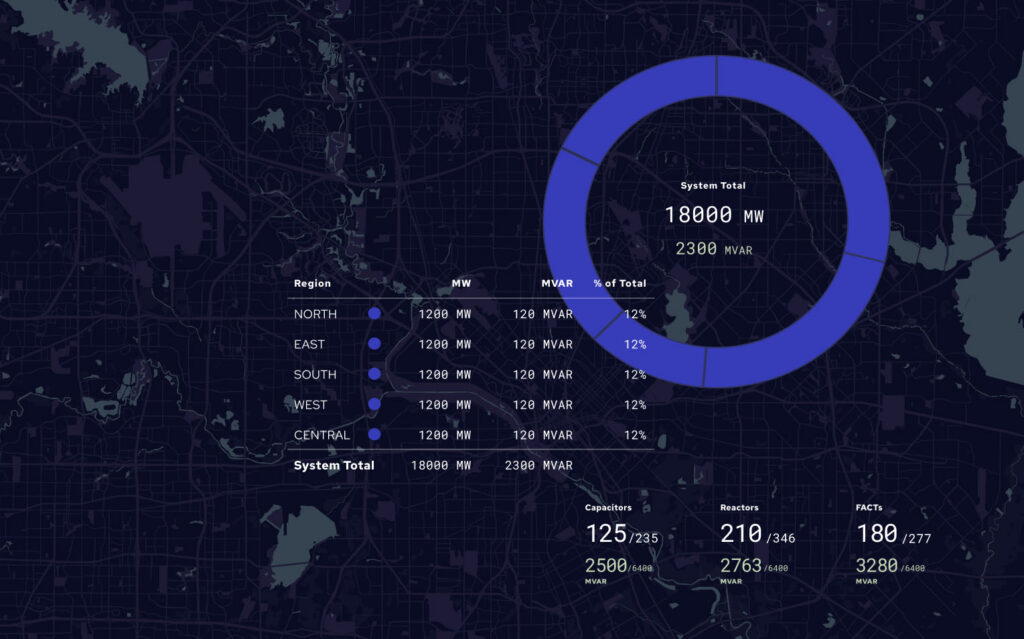
Make informed load decisions in minutes, not months
Large-load siting decisions are happening faster than transmission planning cycles. Minerva’s Transmission Hosting Capacity tool helps utilities see where load can be added — quickly, consistently, and transparently—without months-long studies, manual file prep, or guesswork.
Traditional Transmission Capacity Analysis Is Too Slow for Today’s Grid
Demand is moving faster than planning cycles. Data centers, electrification, and renewables are stacking requests on top of an already-stressed grid. Every siting decision needs a clear answer—quickly.
What happens today
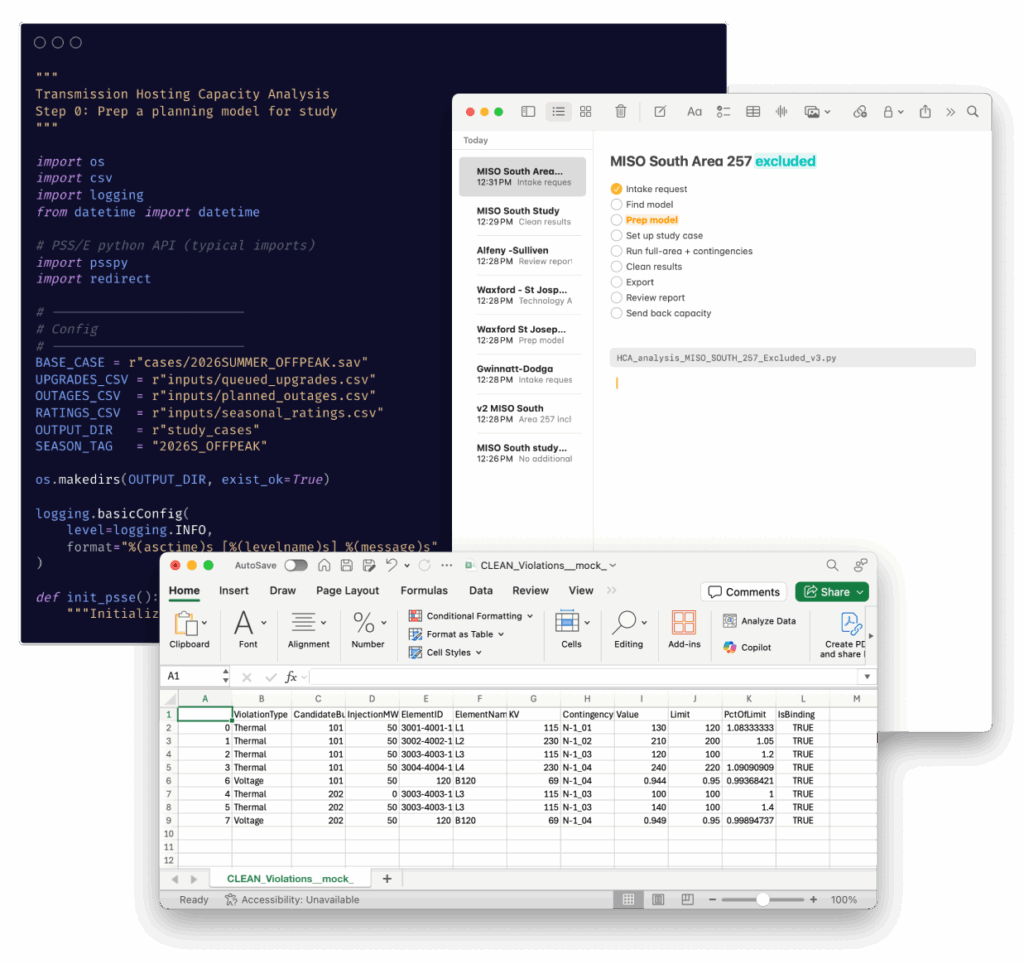
A planner gets a large-load request and spends days pulling the right case and upgrades, then hours building a one-off study. Full-area contingencies run overnight on a laptop, and results get stitched together in spreadsheets. By the time the analysis is finished, the request has either changed—or gone elsewhere.
The bottlenecks are predictable—manual setup, laptop-bound compute, and full-area runs that don’t scale.

If Nothing Changes, Utilities Risk:
Lost siting opportunities when answers arrive after deals are decided.
Longer interconnection timelines that ripple into capital costs and reliability.
Reactive planning that can’t keep up with load growth.
Utilities need a clearer, faster way to understand system capacity—one that grows with demand, not against it.
Minerva Modernizes Transmission Hosting Capacity
We build tools side-by-side with engineers who understand how much is riding on these analyses. Minerva moves the entire hosting capacity workflow into a modern, automated environment—eliminating the slow, manual steps that hold planners back.
Minerva moves hosting capacity analysis into an automated, server-scale workflow:
- Automate and standardize study creation so every request starts clean and consistent.
- Run full-area capacity and contingencies on server-scale compute to collapse turnaround time.
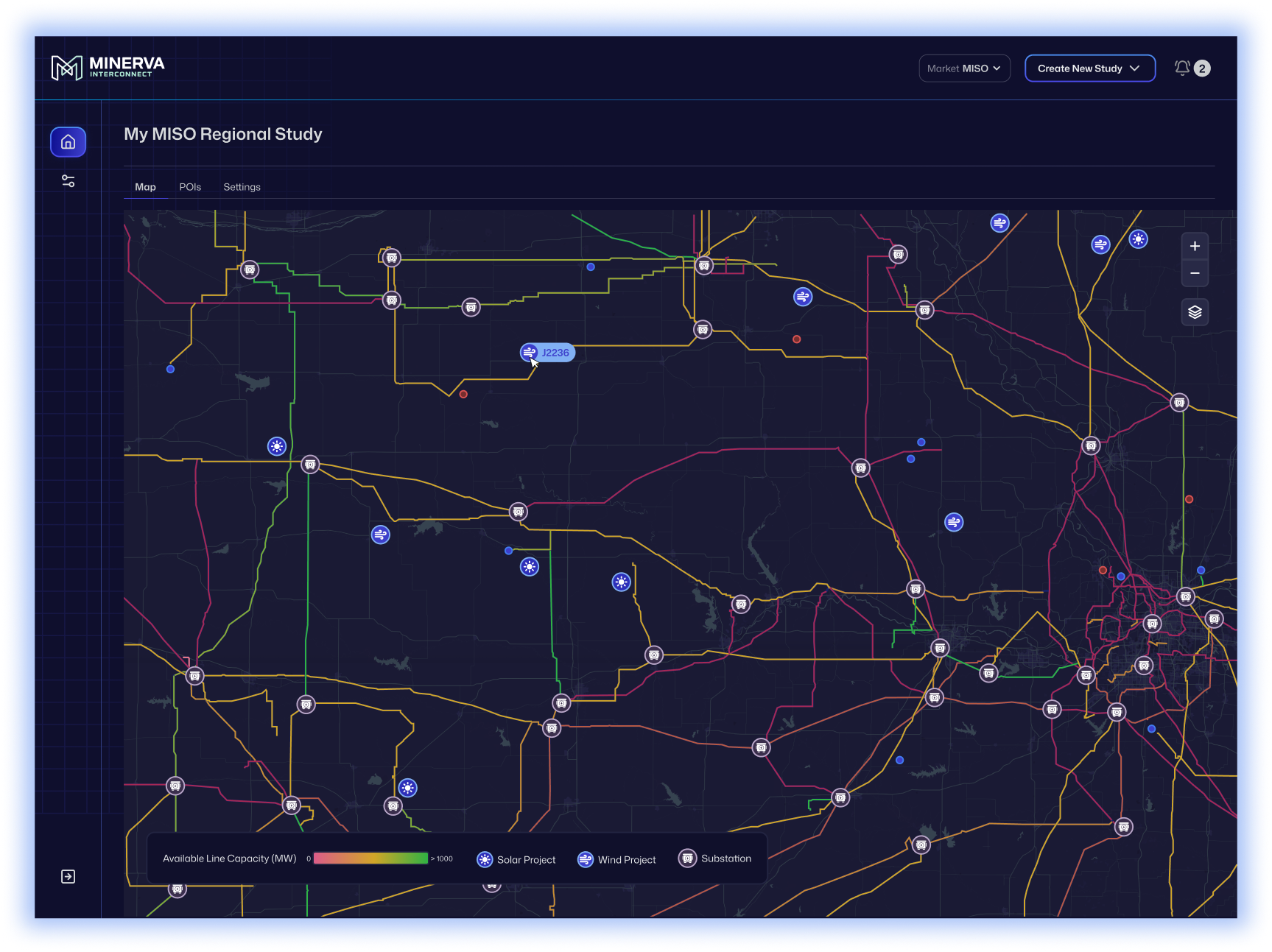
- Deliver visual, decision-ready outputs — from detailed constraints to county-level maps.
With Minerva, planners get speed, transparency, and consistency—without sacrificing engineering judgment.
Capabilites that unlock grid-speed decisions
Automated, server-based study processing
Shift heavy computation off individual laptops to scalable infrastructure — so full-area hosting capacity runs finish dramatically faster.
Concurrent loading & advanced contingencies (N-1, N-1-1, SCED)
Test stability and overload risk under realistic outage and redispatch conditions, including complex scenarios.
Line + bus tapping analysis
Evaluate adding load at a line or station without manual case manipulation, making it easy to compare siting options.
Concurrent studies (multi-bus & multi-line loading)
Run advanced studies that are hard to do manually — exploring deeper system limits without breaking existing workflows.
High-level capacity mapping with full traceability
Generate county- or region-level capacity maps in seconds for executive and economic development conversations, with links back to parameters, contingencies, and project files.

What Utilities Gain
Give planning teams the speed and confidence to keep up with today’s demand.
- 6–8 weeks → dramatically faster full-area studies
- Clear capacity maps for at-a-glance siting decisions
- Less manual babysitting and more high-value analysis
- Repeatable, standardized workflows that reduce variability and onboarding time
- Confidence in deeper scenarios with concurrent loading and advanced contingencies
- Future-ready throughput as load requests and interconnections rise
Why It Matters
Large loads are accelerating nationwide, and transmission systems are under unprecedented stress. Utilities can’t rely on months-long, one-off studies to make high-stakes siting decisions on economic-development timelines.
Minerva gives planning teams:
- Faster answers while requests are still live
- Sharper visibility into headroom and binding constraints
- Higher throughput as volume increases
- Confidence in decisions with major financial and reliability consequences
The grid is evolving quickly. Your hosting capacity workflows should too.