
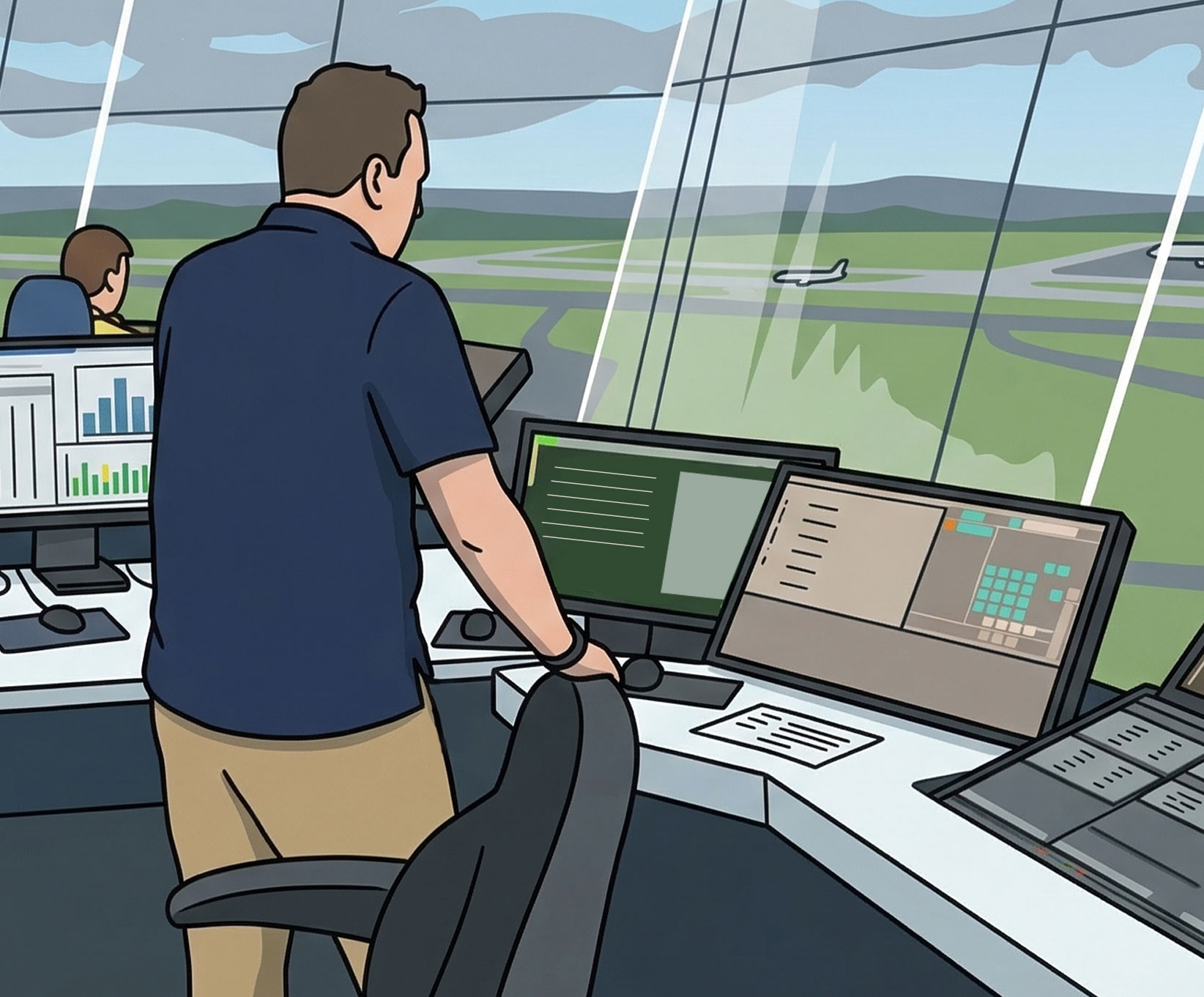
While on a trip to Phoenix, a friend of mine who is a retired air traffic controller was able to arrange a tour through the local union rep of the control tower at Phoenix Sky Harbor International Airport. I thought it was going to be a fun way to pass the time, and I’d get a cool look into a unique profession… something you’d only see in a movie.
The tower itself is not the dimly lit room depicted in movies… that’s TRACON (Terminal Radar Approach Control). We eventually made it down to the TRACON room. That part felt like the movies. Up in the tower cab itself, it just looked like a normal day at the office. Several workstations with large monitors, on-duty controllers in shorts and t-shirts with headsets on, talking to inbound and outbound airplanes. No drama, no flash. Just people working.
The union rep giving us the tour walked us through the different screens. One showed every airplane in the PHX airspace inbound to the north or south runway. He changed a filter from just PHX traffic to the whole globe, and you could see how busy the air truly is.
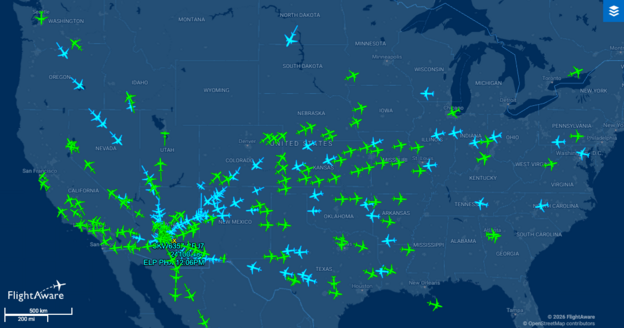
flightaware.com flight tracker is very similar to the display in the tower with inbound plans highlighted one color, and outbound another.
There was another system he pointed out as one of the newest pieces of software they use: TFDM, the Terminal Flight Data Manager. It replaced a previously paper-based system that included everything a controller needs. Flight number, aircraft type, planned speed, requested altitude, equipment, departure time, transponder code, the complete flight plan. When he mentioned it was essentially brand new, I was surprised, because it looks like something built for Windows 95.
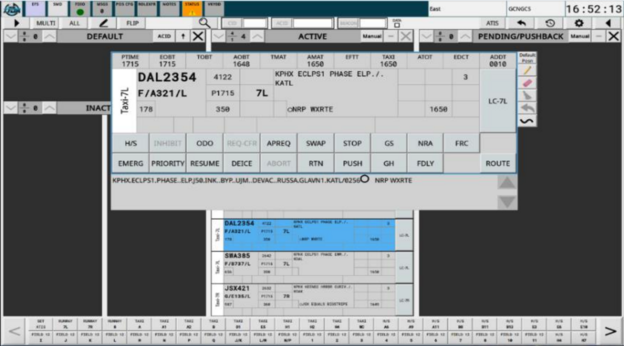
Screenshot of the TFDM system’s Electronic Flight Data (EFD) exchange and Electronic Flight Strips (EFS) in the tower to replace printed flight strips.
Standing in that tower, I didn’t see bad design, or old design. I saw software shaped by the people who actually use it, optimizing for what works right rather than what looks right. Just the information you need, where you need it.
My friend, the retired controller, put it perfectly: “The issue is that it doesn’t have to be that complex. Simple information has to pass from controller to controller. I’m sure you understand that it’s minimal bandwidth, so to speak.”
He’s right. A flight strip, whether paper or digital, carries a small, defined set of data from one person to the next. The job of the interface is to make that handoff clean and reliable. That’s it.
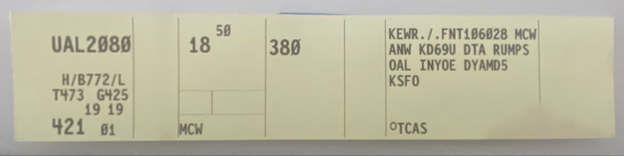
EFS strip from the last plane my retired air traffic controller friend talked to.
And that clarity made me think about how much of the software world operates in the opposite direction. The to-do list app market alone is a graveyard of over-engineered solutions to a problem that pen and paper solved a long time ago. Kanban boards, AI prioritization, integrations with everything, gamification. The simple act of writing something down and crossing it off has been optimized and re-optimized by people who seem more interested in the system than the task. Standing in that tower, looking at software built to pass a small set of information from one person to the next, all of that flair starts to look like what it is: complexity in service of itself.
The Hard Part Isn’t the Software
TFDM isn’t the end of a modernization effort, it’s the beginning. At its core, the rollout isn’t about replacing paper, specifically. It’s about automating and integrating processes that controllers and traffic managers currently do manually or with separate, disconnected tools. Adopting a new system that centralizes all of those things is a massive cultural shift for a workforce of over 10,000 controllers managing more than 44,000 flights a day.
Those paper strips aren’t just basic data visualization… they’re part of how controllers think. The physical position of a strip on the board carries meaning, but the manual process of prepping, stuffing, sorting, and then analyzing those strips pulls attention away from the actual job. That’s the case for digitizing, and it’s a strong one. The goal is to remove friction, not redesign the experience. When you digitize that, you’re not just changing the medium, you’re changing the cognitive and social contract the team built around that medium. Getting that right matters more than making it pretty.
The instinct in software is to map the manual process, build the digital equivalent, train the users, and measure adoption. It starts to feel like treating a culture problem like an onboarding problem. The load-bearing parts of old systems are often invisible until you remove them.
In any environment, first impressions with a new system matter. If the replacement stumbles early, it confirms every doubt the team already had. In a setting where reliability isn’t optional, those doubts are hard to walk back. I don’t think trust is something you can ship in v1.
The Case for Boring Software
I keep coming back to the same question: are we solving the problem, or are we creating a new one? The digital version doesn’t have to be a one-to-one mirror of the paper version, but it shouldn’t stray so far from the system that works today that the user has to relearn the job they already know how to do.
The tools in that tower don’t look like they were made in 2026. They look like they were made thirty or forty years ago, and I think there’s a reason for that. There’s no necessity for bleeding-edge design here. The initial design decisions are honed in on what matters: does this help the controller do their job safely and reliably?
I don’t actually know if the software air traffic controllers interact with is their favorite, or if it’s buggy, or if they think it’s great. I got the feeling that it’s good enough. In a profession where the stakes don’t leave room for anything less, that deserves more respect than we usually give it. The boring-looking software in that tower cab isn’t a failure of imagination. To me, it’s evidence that the people who built it respected the work.
The Reason Doesn’t Have to Be Technical
Remember the TRACON room, the dark one with all the radar screens that felt like the movies? It turns out those rooms don’t actually need to be dark anymore. The older radar displays weren’t backlit, so controllers needed the dim environment to read them. The newer STARS system they use now has backlit screens and TVs everywhere. The technical requirement for the darkness is gone, but decades of working that way doesn’t just flip like a switch. The rooms are still dark. Nobody mandated it. Nobody requested it. It’s just how the job feels right. The absence of a reason to change was reason enough to stay.
Good design isn’t knowing whether to leave the lights on or off. It’s knowing to ask the question first.
Loved the article? Hated it? Didn’t even read it?
We’d love to hear from you.