

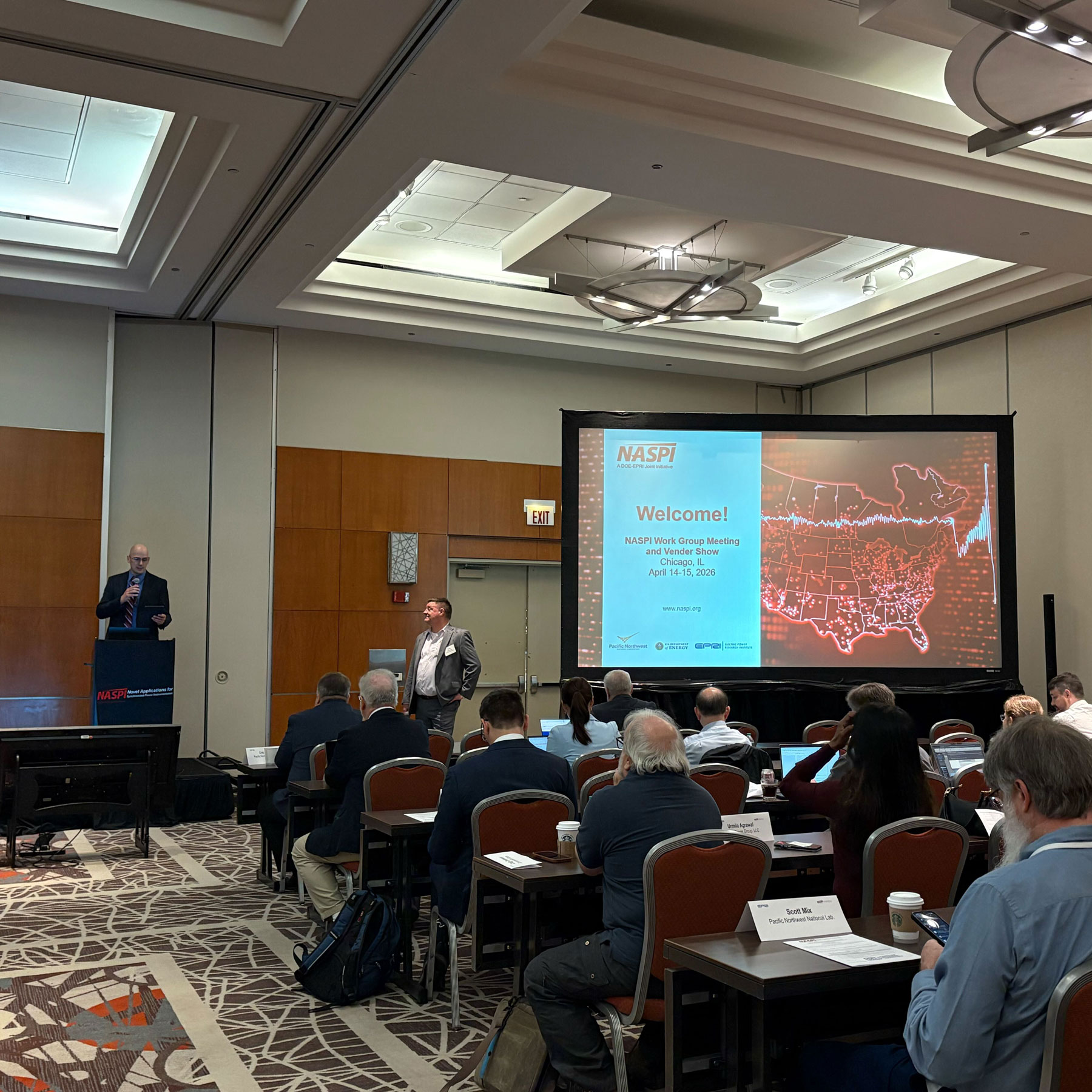
The power grid is evolving faster than ever, and the discussions at this year’s Novel Applications for Synchronized Power Instrumentation (NASPI) Work Group Meeting and Vendor Show reflected this rapid transformation. Held in Chicago, Illinois, on April 14-15, 2026, the in-person event brought together industry leaders to tackle pressing grid challenges.
As a joint initiative between the Department of Energy (DOE) and the Electric Power Research Institute (EPRI), NASPI 2026 showcased vital solutions for grid modernization. Featuring a distinguished keynote address by Craig Creamean, Vice President of Transmission Operations at Exelon Corporation, and many technical presentations, the event provided a comprehensive look at the future of power system dynamics, grid monitoring, and data analytics.

Here is a deep dive into the key themes, tools, methodologies, and expert presentations from NASPI 2026.
1. The Impact of Data Centers and Inverter-Based Resources (IBRs)
A major focal point across multiple sessions was the dramatic shift in grid dynamics driven by the rapid integration of IBRs and the massive power demands of data centers.
- Data Center Dynamics: AI training workloads induce oscillations across broad frequency ranges which pose reliability risks. Kaustav Chatterjee from PNNL presented a critical technical report on “Measurement Systems for Monitoring Data Center Oscillations” where PMU limitations with high frequencies were discussed.
- IBR Performance Response and Analytics Monitoring: Bikal Pudasaini discussed dynamic performance analysis of an inverter-based PV plant and the challenges inverter settings posed on expected behavior. Priya Mana from PNNL shared updates from the white paper expected to be published next month.
2. Success Stories in Real-Time Operations
With grid complexities increasing, the need for synchronized measurements and actionable advanced analytics is paramount. Several utility success stories highlighted how the industry is already deploying these monitoring solutions.
- Islanding Support in Brazil: ONS presented their use of OpenWAMS and ~1,000 PMUs to manage islanding resynchronization. Because islands can drift faster than SCADA refresh cycles, PMU data provides the granular measurements necessary to safely reconnect islands.
- Cloud-Based Oscillation Monitoring: Xiaochuan Luo from ISO-NE and Yang Chen from PJM demonstrated ESAMS (Eastern Interconnection Situational Awareness and Monitoring System), a tool that analyzes streamed PMU data to detect wide-area oscillations, identify source of oscillation and automatically deliver notifications to reliability coordinators.
- Model Calibration: Fernando Fachini of Dominion Energy shared a framework for generator unit model parameter calibration using synchrophasor data. By using the Morris Algorithm for sensitivity analysis and Bayesian Optimization for tuning, they ensure models accurately reflect field behavior.
3. Next-Generation Tools
Several software platforms aimed at translating complex synchrophasor data into actionable insights for operators.
- Force Oscillation Location: Lin Zhu from EPRI presented its Forced Oscillation Localization Tool (FOLT), which aims to estimate source locations and source types for wide-band frequency oscillations ranging from less than 0.1Hz up to 15Hz.
- OPTIMA Initiative: Matthew Rhodes from SRP discussed the DOE initiative, which is developing tools for real-time health risk assessments, anomaly detection, and grid strength monitoring in IBR-dominated grids. A collaborative effort with ASU, PNNL, Denovo Energy Solutions, GE Vernova to develop a wide range of tools
- Grid Operator Analytics and Assessment Tools for Inverter-Based Resources Dominated Grid (GOAAT-IBR): Interactive dashboard visualizing system health in real time: grid inertia, IBR related sub-sync oscillations, and grid strength. Disturbance event correlation and curated datasets for post event analysis
- Dynamic Assessment of System Health for Inverter-based Resource (IBR)- dominant Power Systems (DASH-IBR)
- Wave Apps Platform: Wide area monitoring based on point on wave (POW) data containing a wide range of analytical tools: Oscillation correlation Analysis, Oscillation Source Localization, Nuisance Trip Detection, Grid Strength Monitoring
- V²Cal Tool: Pavel Etingov from PNNL presented the “Verify & Validate + Calibrate Tool for Automated Model Parameters Tuning” during the Engineering Analysis Task Team meeting. A tool for automated model validation and parameter tuning to help utilities meet NERC MOD-026-02.
4. Breaking Data Silos: The Call for Sharing
Emmanuel Oleka from Dominion Energy delivered a powerful argument for cross-boundary data sharing. While many utilities have invested in PMUs, the data often remains siloed due to cybersecurity (NERC CIP) and institutional concerns.
- The Risk of Silos: Without data sharing across tie-lines, operators face delayed recognition of grid-wide problems and misdiagnosis of events.
- A Practical Playbook: Oleka called for NASPI to develop a practical “playbook” for neighbor-to-neighbor sharing, potentially using ISOs as data brokers to standardize governance and technical procedures.
- Data as Infrastructure: Eric Andersen of PNNL echoed this, stressing that utilities must view data as critical operational infrastructure and address the risks of not sharing, such as atrophied skillsets and missed technological advances.
Conclusion and Industry Support
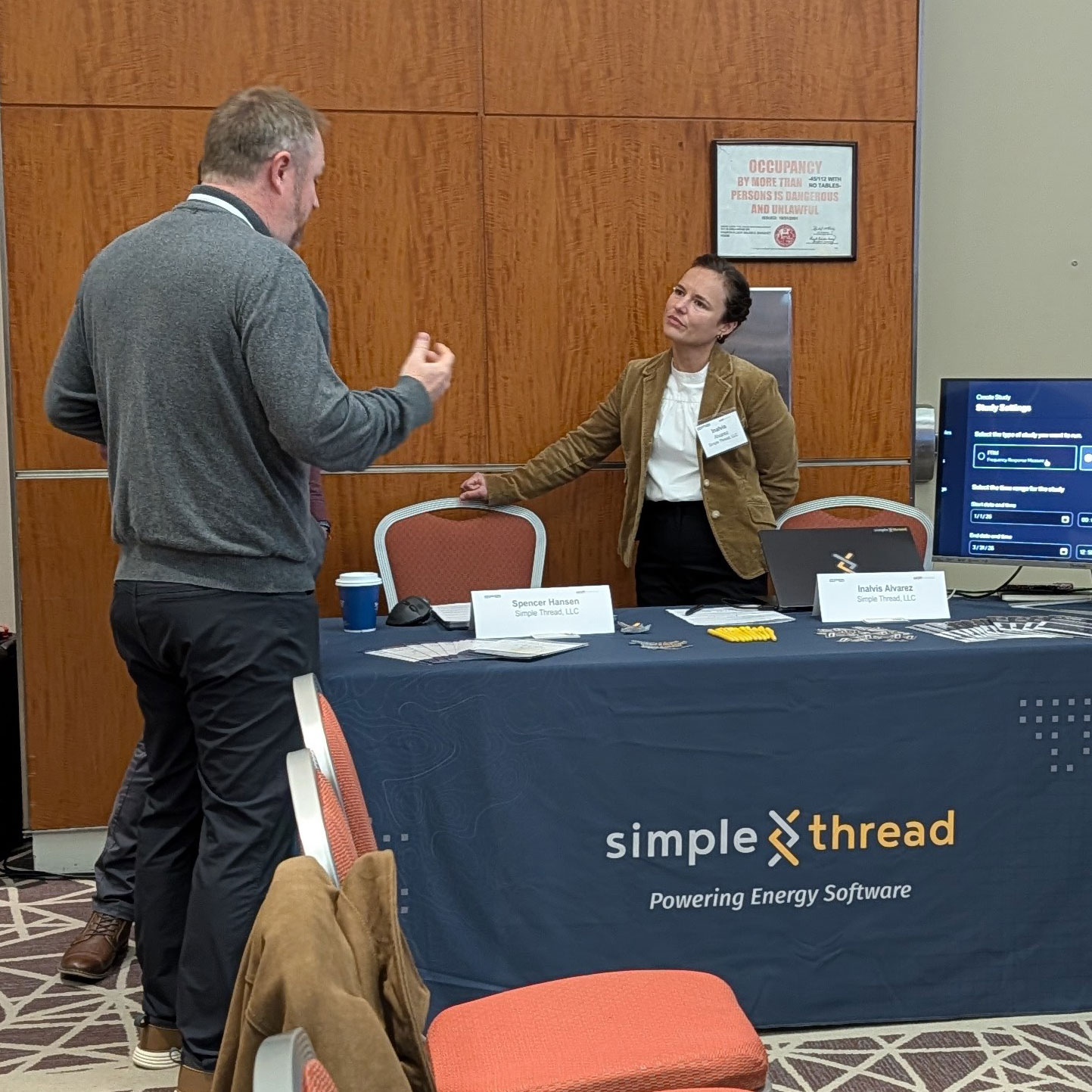
At the vendor show, we were thrilled to share the latest on Aion Pulse—the evolution of the Generator Scorecard tool licensed from PNNL. The feedback from industry peers was instrumental in shaping our roadmap.
NASPI 2026 proved that while the grid is facing unprecedented volatility from AI data centers and renewable energy integration, the analytical tools required to maintain stability are rapidly evolving. Whether it is moving from PMUs to continuous POW analytics, automating model validation and parameter tuning, or fighting for better utility-to-utility data sharing, the industry is taking decisive steps to secure the grid of the future.
Loved the article? Hated it? Didn’t even read it?
We’d love to hear from you.