
AUGUST ISSUE OF THE CURRENT
GE Vernova’s gas turbine backlog hit 100 gigawatts in the first quarter of 2026. Standard large power transformers now average 128 weeks from order to delivery. Substation transformer lead times have stretched from roughly 140 weeks in 2023 to more than 160 weeks this year.
The equipment timeline is the project timeline now. That was already true before hurricane season opened.
How the Numbers Got Here
The transformer shortage was supposed to be the bottleneck. It has become the template.
Wood Mackenzie’s second quarter 2025 survey found standard large power transformers averaging 128 weeks for delivery. Generator step-up transformer demand increased 274% between 2019 and 2025. Distribution transformers that ran 8 to 12 weeks before 2020 now run 30 to 50 weeks for standard specifications.
Gas turbines followed the same path faster. Global orders amount to enough turbines to produce 110 GW of power against available manufacturing capacity of 60 to 70 GW. Lead times for new combined-cycle plants have reached five years, up from three and a half in 2023, with costs rising 49% over the same period. Siemens Energy is carrying a record order backlog of roughly $168 billion. Mitsubishi says turbines ordered today won’t arrive until 2028 to 2030. There is no adjacent equipment category to pivot to. Switchgear lead times have held closer to a year but remain elevated. The constrained items are the ones every project needs.
Some data center operators have started repurposing jet engines from grounded aircraft as temporary generation. It reads like a workaround. It’s closer to what rational procurement looks like when every conventional option is measured in years.
“The price of a large power transformer is no longer the question. Getting one is.”
In April, the White House invoked Section 303 of the Defense Production Act, calling the nation’s grid supply chain dangerously limited. A new transformer manufacturing facility takes three to five years to commission. The DPA authority sunsets September 30 unless Congress reauthorizes it. DOE hasn’t identified specific projects, funding levels, or timelines.
The declaration names the problem accurately. The delivery queue doesn’t move because Washington acknowledged it.
Who’s Claiming the Manufacturing Base
Data centers were historically a marginal slice of electrical equipment demand. Wood Mackenzie projects they could account for 40% of total US electrical equipment demand by 2030, up from a single-digit share just a few years ago. US data center capacity is expected to scale from roughly 24 GW to 110 GW between 2026 and 2030.
That shift is happening inside the same manufacturing base utilities depend on for transmission upgrades, new generation connections, and storm recovery. Every category of grid project depends on the same pool of generator step-up transformers, switchgear, and high-voltage cables. Annual transformer demand could exceed 9,000 units by 2030, up from roughly 1,500 today.
A new class of buyer arrived in this market with capital, urgency, and no obligation to sequence its orders around anyone else’s planning calendar. The window for any given project closes faster now than it did three years ago, which is why the equipment order has to go in before the project fully clears.
“The projects advancing in this environment ordered their equipment before the business case closed. That’s not aggressive procurement. That’s what the supply chain now requires.”
What the Sequence Now Requires
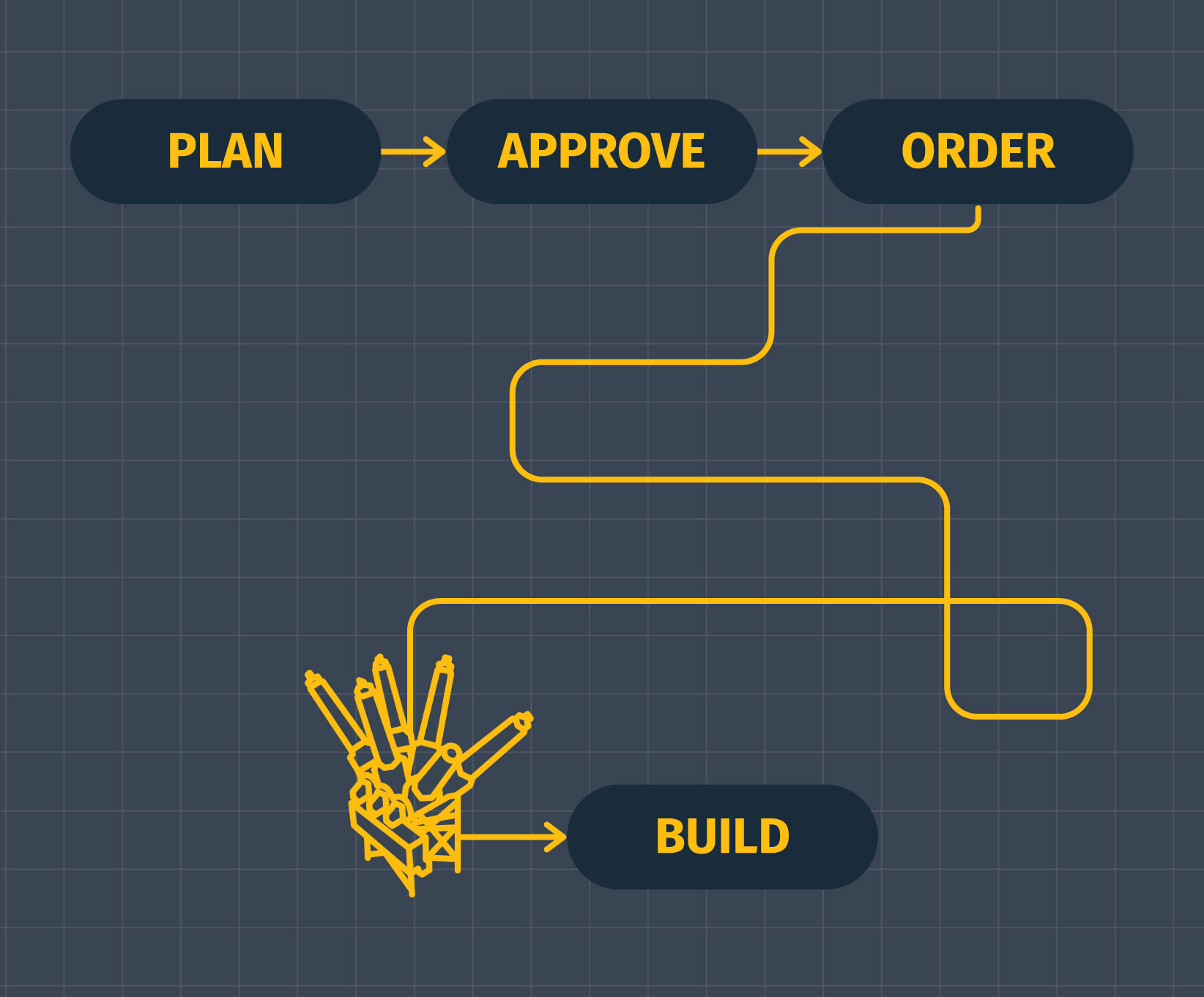
The transformer order has to come before the project is approved. It also has to come before the storm.
When Hurricane Helene tore through the Southeast in September 2024, Duke Energy had more than 350 substations impacted at the peak of the event. Brian Naumuk, Duke’s senior vice president of grid services, called it the most transmission-intensive storm the company had ever seen. The 2026 season is forecast to be below normal. A below-normal season still produces storms, and even one storm making landfall near concentrated infrastructure can be catastrophic. What begins as storm damage, as Duke learned, can quickly become a prolonged recovery cycle when the equipment needed to restore service is sitting on a 30 to 50 week wait.
The utilities that could move after Helene were the ones with inventory. The ones waiting on orders placed after the storm were asking communities to wait with them on a lead time that didn’t exist in that form two years earlier.
A capital project that clears every internal hurdle and then places its equipment order faces 128 to 160 weeks of wait time regardless of how urgent the need is. Utilities placing orders before projects have full approval aren’t getting ahead of themselves. They’re absorbing a constraint that the normal capital process wasn’t built to handle.
The grid takes years to build. The equipment to build it takes years to arrive. When a storm doesn’t wait for either, the only utilities with options are the ones who started the clock early enough.
Thanks for reading. Subscribe to The Current and follow Simple Thread on LinkedIn for fresh analysis, project highlights, and event updates, delivered straight from the front lines of utility software.
Loved the article? Hated it? Didn’t even read it?
We’d love to hear from you.