
Originally published in our March The Current newsletter. Subscribe on LinkedIn.
— —
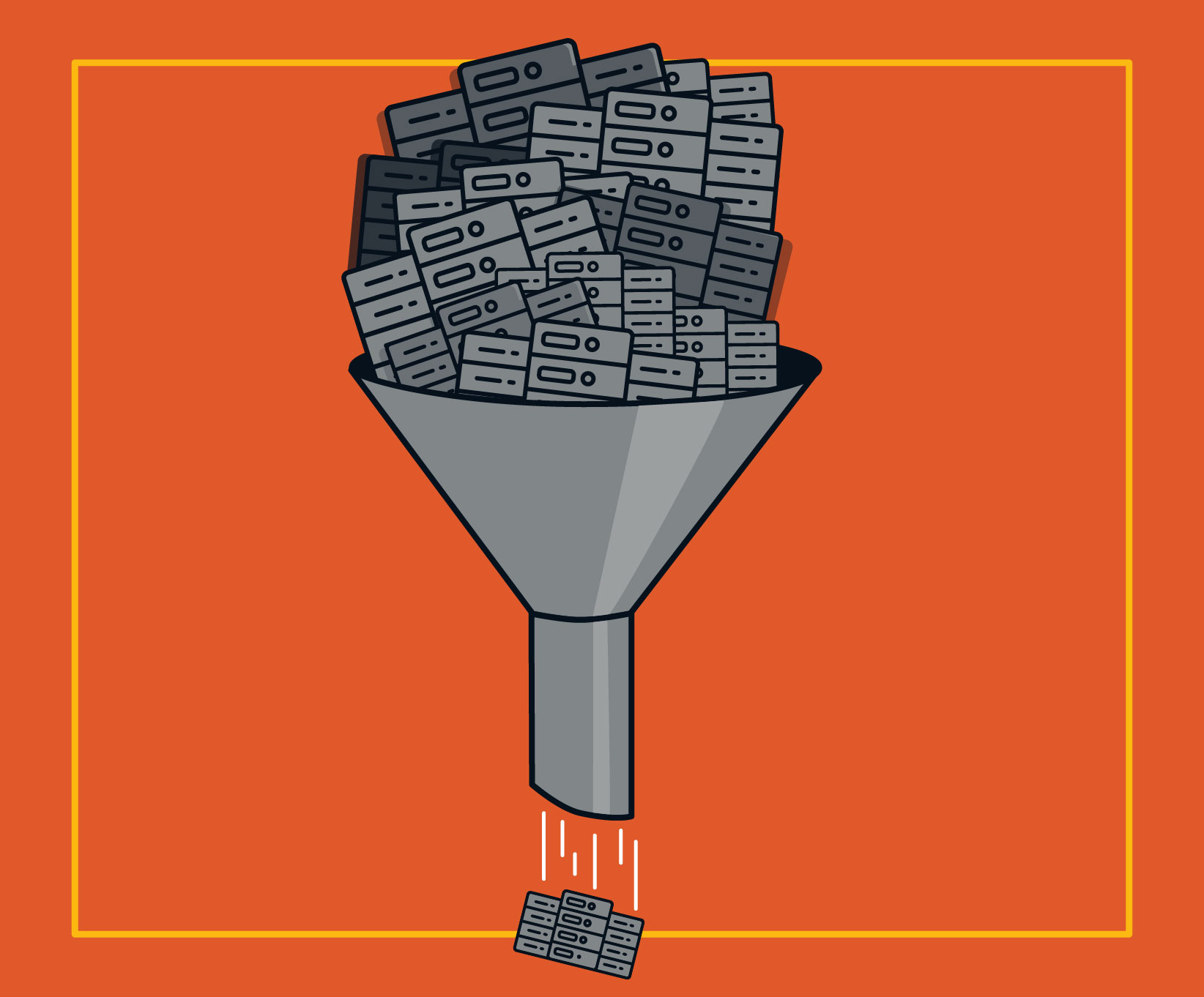
ERCOT has more than 225 GW of large load requests working through its interconnection process right now. Its all-time peak demand record is 85.5 GW. The queue is nearly three times that.
That number alone tells you something has fundamentally shifted. But the volume isn’t even the hardest part. The harder part is that the rules for connecting this load don’t fully exist yet, and the tools being used to study it were built for a completely different class of customer.
Every major grid operator in the country is scrambling to catch up. The load isn’t waiting for them.
“For the entire history of the Federal Power Act, FERC has never asserted jurisdiction over how loads connect to the transmission grid. That changes on April 30.”
The Rule That Never Existed
For the entire history of the Federal Power Act, FERC has never asserted jurisdiction over how loads connect to the transmission grid. Generation interconnection, yes. Load interconnection, no. That’s always been handled locally, through retail tariffs, managed by utilities and state regulators. It worked when the largest load in a region might be an aluminum smelter or a steel mill. It doesn’t work when a single campus is requesting 500 MW and the developer’s commercial timeline is measured in months, not years.
In October 2025, the Secretary of Energy directed FERC to change that. The resulting Advance Notice of Proposed Rulemaking set out 14 guiding principles for standardizing large load interconnection across the country. FERC has until April 30 to act. That’s 44 days from now.
What makes this moment unusual isn’t just the deadline. It’s what the deadline requires. FERC is being asked to assert jurisdiction it has never claimed, over a load class that didn’t meaningfully exist a decade ago, on a timeline that would be aggressive even for a routine rulemaking. The National Association of State Utility Consumer Advocates called the April 30 deadline “patently unreasonable.” State regulators are already filing jurisdictional objections. The proceedings are contentious.
Whether FERC meets the deadline or not, the pressure it represents is real. The rules are being written right now. And the planning teams responsible for studying and connecting this load are caught in the middle of it.
225 Gigawatts in Queue
The regulatory complexity might be manageable if the volume wasn’t so staggering.
The sequential study model wasn’t designed for this. When a new request enters the queue, the assumptions used in earlier studies can become outdated before those studies finish. That triggers restudies. Restudies delay everything behind them. ERCOT has contracted McKinsey, created an entirely new organizational division, and is rebuilding its large load study process around a batch framework, studying groups of projects together under shared assumptions rather than one at a time. The first workshop ran in February. Final criteria aren’t expected until mid-2026. Does this sound familiar to anyone?
PJM isn’t in a better position. In December 2025, FERC found PJM’s tariff unjust and unreasonable because it contained no clear rules for how large loads co-located with generation should be served. PJM was directed to create three entirely new transmission service categories and file compliance revisions within 60 days. Those filings are working through a paper hearing process with reply briefs due in April. CAISO held a public large load stakeholder session in February to begin sorting out its own approach.
We’ve seen regulatory infrastructure lag physical reality before. Every major shift in the generation mix has triggered a version of this scramble. What’s different this time is the speed. The load is already here. The rules aren’t.
“The load class is new. The study assumptions aren’t. That gap is where reliability risk lives.”
What Makes This Load Different
The traditional interconnection study assumes a load with a predictable, stable profile. You model it. You study the network impact. You build the upgrades. You connect it.
A data center running AI workloads doesn’t fit that model. Its power electronics behave differently under fault conditions than motors, furnaces, or any industrial load the interconnection process was designed for. AI-driven computing creates pulsating load characteristics, with oscillations and sub-synchronous resonance that standard study methodologies weren’t built to capture. And because the facility is software-defined, a load that behaved one way during the interconnection study can behave entirely differently six months after energization.
We’ve written before about the IEEE Standards Association’s call for harmonized performance standards, specifically because data centers without them will configure their systems to protect the facility first.
“A large data center cluster tripping offline during a disturbance doesn’t simply remove load. It triggers frequency and voltage spikes that can cascade across an entire interconnection.”
Connecting a new class of load using study assumptions built for a different one isn’t just an inconvenience. It’s a reliability risk that compounds with every new gigawatt that clears the queue under the wrong model.
The April 30 deadline will pass as either an action or a precedent. If FERC acts, utility planning teams will need to quickly understand what new study requirements, cost allocation rules, and queue processes apply to requests already in motion. If the deadline slips, the fragmentation continues. Different thresholds in different regions. Different study processes, different cost obligations, different behavioral expectations for the same class of load.
The volume isn’t going down. The complexity isn’t getting simpler. And the load itself still doesn’t behave the way the models expect it to.
The grid was built for loads that stand still. The work now is building the tools, the processes, and the frameworks to connect the ones that don’t.
Loved the article? Hated it? Didn’t even read it?
We’d love to hear from you.