
Plan with confidence using real-world grid capacity
Distribution systems are changing faster than traditional studies can keep up. Minerva Hosting Capacity gives planners a clear, time-aware view of how much load and distributed energy resources (DER) the grid can support—without manual studies, fragmented data, or static assumptions.
Traditional Hosting Capacity Falls Short for Today’s Grid
DER growth, electrification, and new load patterns are reshaping distribution systems. Planners need answers that reflect real conditions—not just worst-case snapshots.
What happens today
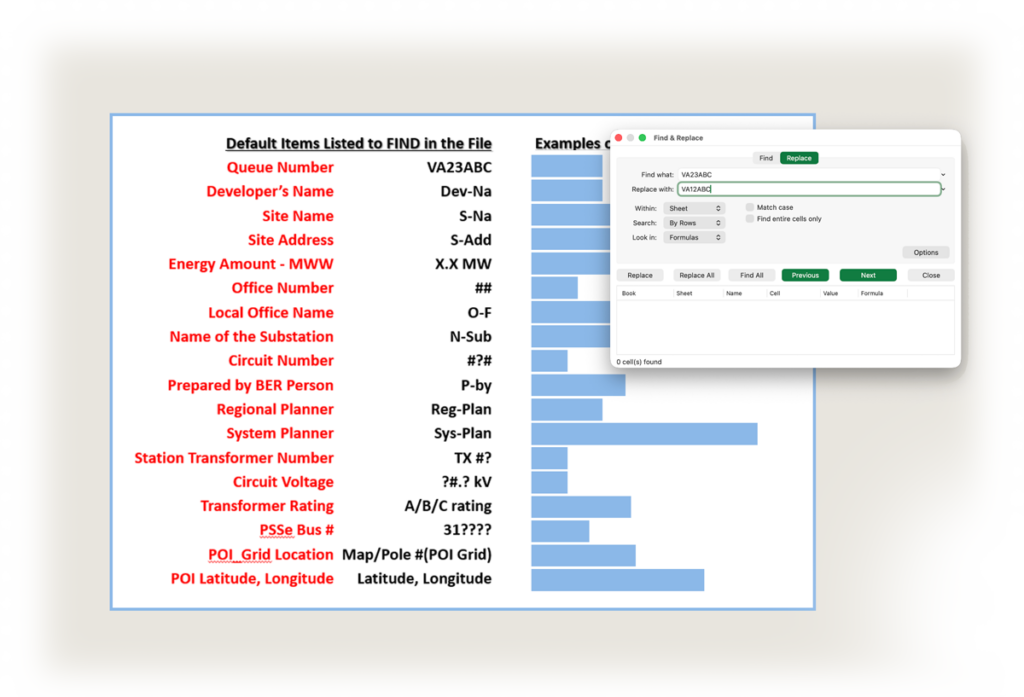
Engineers run scenario-specific studies that take days or weeks to prepare. Data lives across GIS, SCADA, and planning models, requiring manual stitching and constant updates. Results reflect only peak or minimum loading conditions, leaving gaps in understanding how the system behaves the rest of the year.
By the time results are ready, system conditions—and requests—have already changed.
The bottlenecks are familiar: siloed data, manual setup, and static assumptions that don’t reflect real-world variability.

If Nothing Changes, Utilities Risk:
Delayed interconnection decisions and frustrated developers
Over- or under-building infrastructure due to limited visibility
Missed opportunities to better utilize existing grid assets
Planning processes that can’t scale with rising demand
Utilities need a clearer, more dynamic way to understand distribution capacity—one that reflects how the grid actually operates.
Minerva Modernizes Distribution Hosting Capacity
We build tools alongside engineers who know how complex and high-stakes these decisions are. Minerva transforms hosting capacity from a static, manual process into a dynamic, automated workflow.
Minerva moves hosting capacity into a modern, integrated environment:
- Continuously evaluate capacity across every hour of the year
- Integrate GIS, SCADA, and planning models into one workflow
- Automate study setup and updates to eliminate manual effort
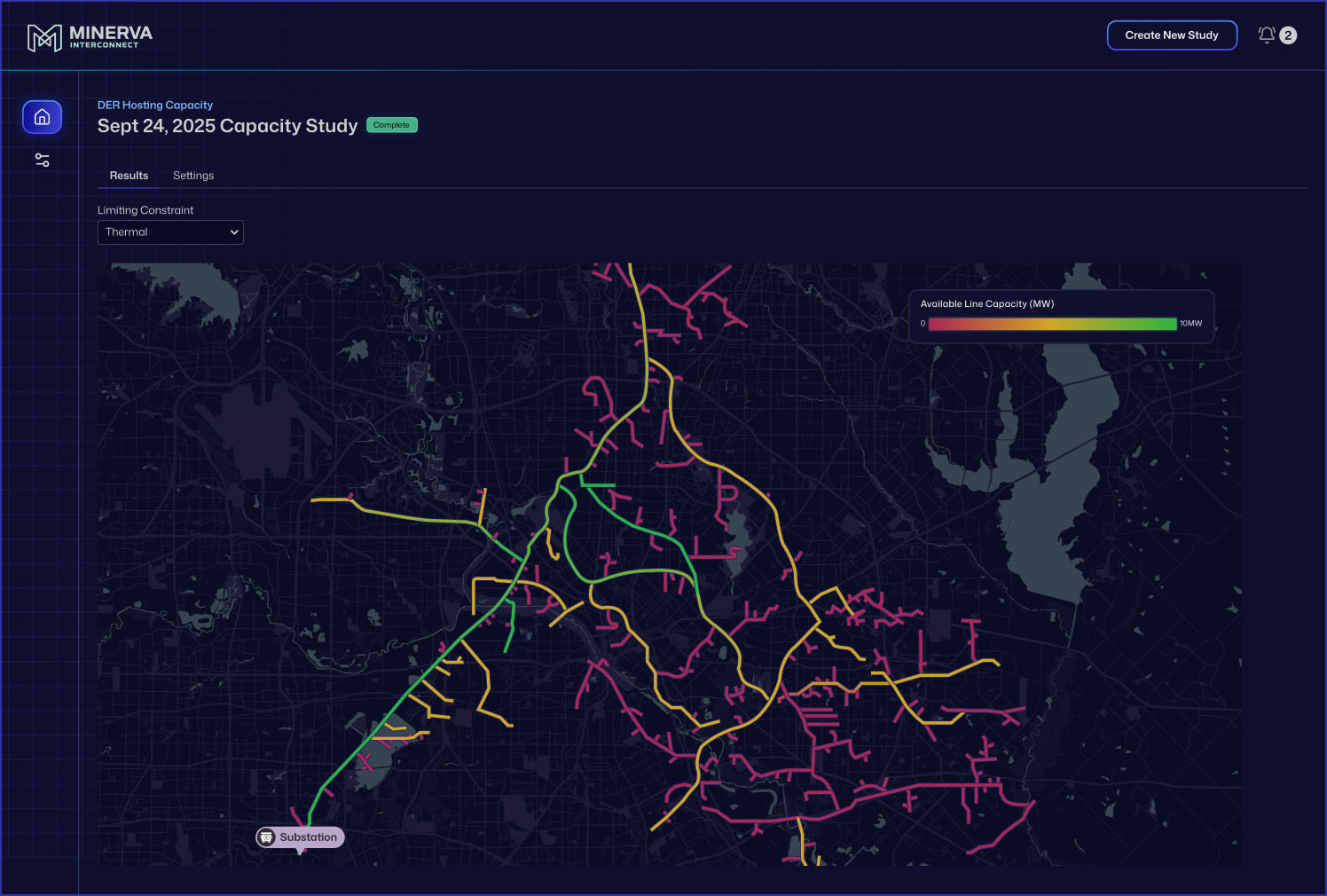
- Deliver intuitive, map-based insights tied to real constraints
With Minerva, planners gain visibility, speed, and confidence—without sacrificing engineering rigor.
Capabilities That Unlock Better Planning Decisions
Time-aware hosting capacity
Understand how capacity changes hour by hour—not just at peak or light load—so decisions reflect real system behavior.
Load and generation analysis
Evaluate both DER and load impacts while identifying limiting constraints like thermal overloads and voltage violations.
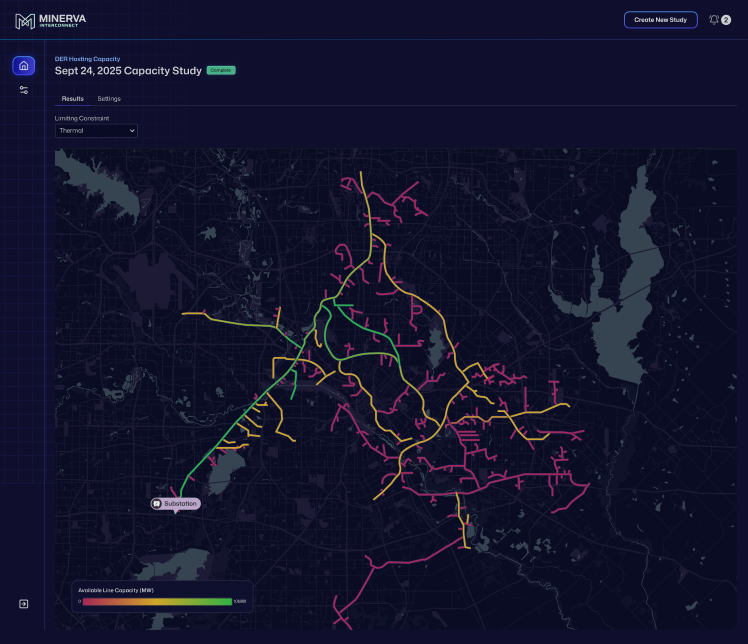
Interactive map-based visualization
Explore hosting capacity across the network with intuitive visuals tied directly to underlying system constraints.
Scenario and probabilistic analysis
Move beyond deterministic studies to evaluate uncertainty, variability, and future grid conditions.
Automated, scalable study processing
Shift heavy computation off manual workflows into automated, repeatable processes that scale with demand.

What Utilities Gain
Give your planning team the tools to keep up with modern grid demands:
- Faster study turnaround and fewer restudies
- Clear, time-aware insights for better interconnection decisions
- Reduced manual effort and engineering bottlenecks
- Improved asset utilization and deferred infrastructure upgrades
- Greater confidence in planning under uncertainty
- Scalable workflows that grow with DER and load demand
Why It Matters
Distribution systems are becoming more dynamic, and the cost of uncertainty is rising. Static hosting capacity maps only tell part of the story.
Minerva gives planning teams:
- Better situational awareness of real grid conditions
- Faster, more informed decisions on interconnections and upgrades
- Improved reliability and risk reduction through deeper insight
- The ability to fully utilize existing infrastructure before building new
The grid isn’t static. Your hosting capacity insights shouldn’t be either.