
It’s the start of the year, and looking back at my work with colleagues over the past twelve months, one thing I had hoped to do but didn’t was draft enough guidance to serve the designers and devs I work with. I set it aside as a standalone project—which means it wallows at the bottom of my to-do list as project work stacks up.
The past couple of years, a lot of my resolutions roll over one year to the next, and it seems like this one was going to be no different.
Then an engineer recently asked me, How do you know to do what you do? As usual, I didn’t really have a good answer until well after I walked away. The right answer is pretty obvious: like any design process, I’m making a multitude of tiny decisions that lead to the final result.
This highlighted to me that while my colleagues often trust that my work… works, it would help if they understood these tiny decisions and were able to make some themselves.
So I’ve put together a plan. I’m experimenting with a new approach that integrates drafting guidance with my project work, making creating guidance for others is inherent to my content design process.
Document everything
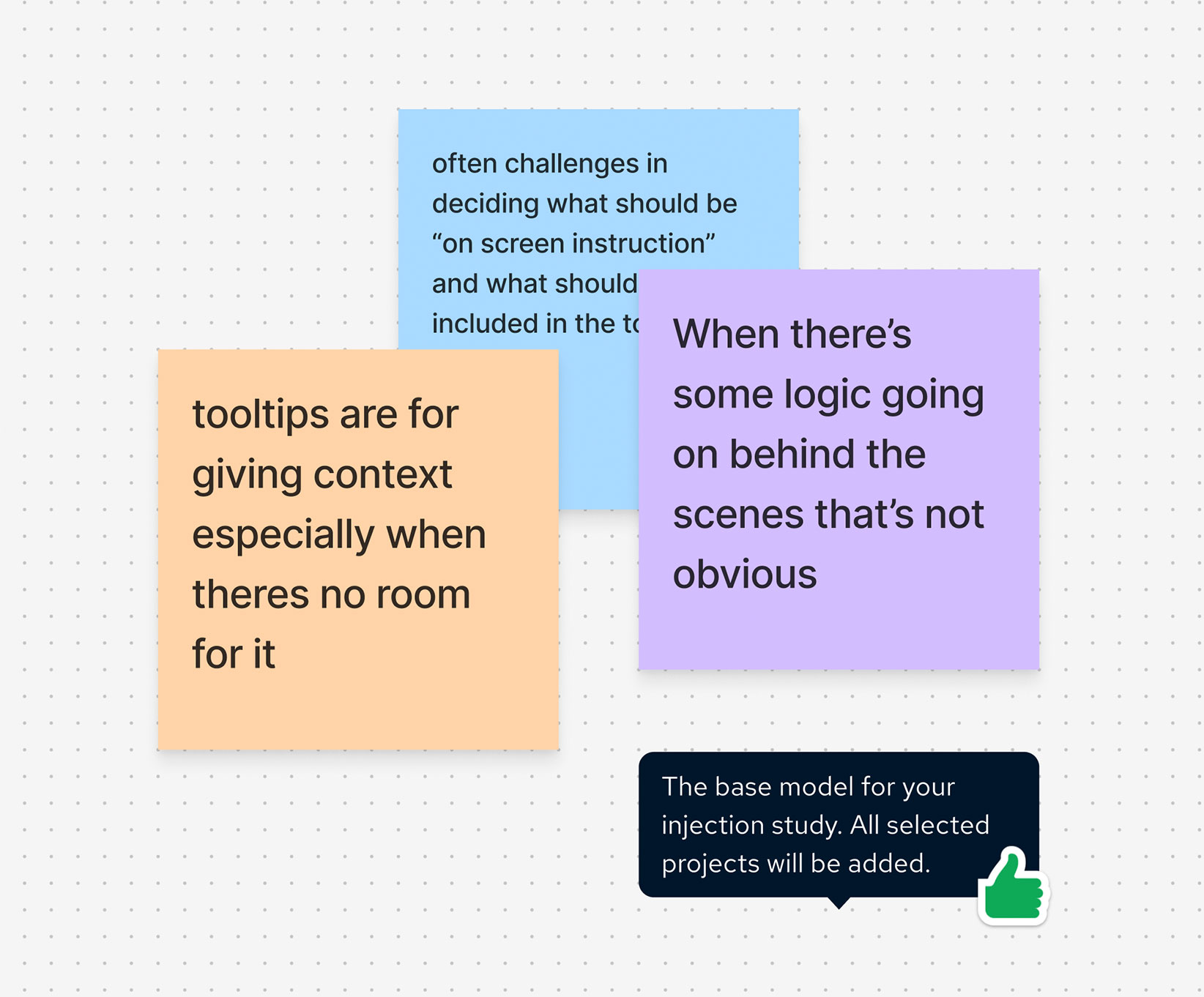
So one of my content resolutions this year is to try and document my process more. When I’m working in Figma, I’m adding more notes about why I’m choosing a word, a sentence structure, or line break.
This transparency helps jumpstart the discussion around our final approach—and since we’re all starting from the same point, I’m spending less time explaining the why.
Turn decisions into guidance
As I accumulate these notes, some immediately jump out as obviously translatable to generalized content guidance: capitalization, for example
For others, the potential for systemic guidance only becomes clear once we’ve made and documented a choice across several features or systems: or a word we prefer, for example, or a way of phrasing a particular choice.
By the time I realize I have a note that should be more general guidance, it’s already written. I can just copy & paste into our docs, with minimal tweaks.
Empower others
Content guidance exists so that others can work within a system, information is delivered clearly and consistently, and users feel like we’re respecting their time.
Sharing this guidance is part of the work. This means citing it as a reference, pinning it to appropriate channels, and working it into your design system. This leads to a couple of different avenues where colleagues can find answers to questions themselves, and only call in content design for particularly thorny issues.
The idea is essentially a “full-stack” content approach, to lift up everyone’s content skills to improve readability, consistency, and clarity no matter where we work on the system.
Loved the article? Hated it? Didn’t even read it?
We’d love to hear from you.